Showing posts with label Holidays. Show all posts

Tuesday, March 08, 2011

Product Review: Wafer Cake

Whether it’s baked milk or pickled tomatoes, Russian and Eastern European grocery stores are filled with mysterious and sometimes delicious foodstuffs. In this occasional series, I review the good, the bad and the weird.

I saved this post especially for March 8, International Women's Day. In Soviet Russia--and, I suppose, to this day--March 8 is an all-purpose women's holiday, a mix of Valentine's Day and Mother's Day. If you're from Russia, this chocolate wafer cake is a totally appropriate gift for the women in your life--along with a bouquet of mimosas, the traditional flowers for this holiday.

You wouldn’t think that a wafer “cake” (wafel’ni tort/вафельный торт) is anything special, but, according to my mom, getting your hands on one was a pretty big deal in the Soviet times.

This cake is basically a big wafer, usually covered in chocolate, and always sold in a cardboard box. The brand in the photo is called Kapriz (каприз)--that is, "caprice"!

The best versions of wafer cake crisp and fresh, and aren’t bad with a cup of tea or coffee. To serve, slice into neat square or rectangles, like a good Russian hostess.

For a guide to Russian/Eastern European stores in the Milwaukee area that sell this kind of thing, see my shopping guides.

Saturday, April 03, 2010

Happy Spring

Coming from a non-religious Soviet culture, my family doesn't truly celebrate religious holidays. So you could call this dinner a "festive spring meal" or somesuch, where Russian holiday favorites ("herring in a fur coat," pickled mushrooms) and remnants of religious traditions (dyed eggs) mingle on the same table.

Wednesday, December 30, 2009

Happy New Year!

This is a time when Christmas trees are hitting the curb and holiday celebrations are winding down for most Americans. For Russians, however, the party starts on December 31. In the Soviet times, New Year's Eve became the big winter holiday, complete with the many trappings of Christmas, but with none of the religious connotations. (Think New Year trees and "Father Frost" bearing gifts; more on this below.) I'm off to celebrate with friends and traditional Russian New Year's Eve food (recipes below). Have a wonderful New Year's, everyone. Thanks for reading all year long.

From the archives:
More on New Year's, and a recipe for "herring in a fur coat."
The New York Times on New Year's in the Soviet times.
More on Russian New Year's history.

New Year's Recipes:
Mushroom deviled eggs
Oliver salad

Saturday, November 28, 2009

Thanksgiving in a Bowl Soup

Sorry for the long silence, guys. Oh, I’ve been cooking, but I haven’t made anything exciting in weeks. Nothing that’s inspired me to write a post that’s longer than 140 characters. (See my Twitter feed, at right, for the latest in Yulinka Cooks non-news.)

This soup is a rare exception. I thought of it while driving home from a post-Thanksgiving shopping trip, knowing I had various soup-friendly ingredients to use up. The ingredients were chicken stock, a bunch of spinach, butternut squash puree originally made for ravioli, the aforementioned ravioli, and leftover turkey.

This is how it all came together. I brought the chicken stock to simmer and added the butternut squash puree (roasted squash, a few tablespoons each of butter and whipped cream cheese, hint of sage and nutmeg--yum). In the meantime, in a skillet, I sautéed a diced onion in olive oil, and added a bunch of chopped spinach to the pan when the onion was almost cooked. The spinach was sautéed for a few minutes until it wilted. I added the vegetables to the chicken stock; then I added few handfuls of pre-frozen butternut squash ravioli to the soup pot.

I hesitate to share my ravioli recipe because a) it was something I created on a lark one Sunday night, b) I didn’t really follow a recipe and I didn’t use a pasta machine to roll out my dough, two steps usually recommended for fresh pasta-beginners, and c) I really overstuffed the ravioli and most of them didn’t seal properly. (I used this pasta dough recipe, but in the future I’ll follow this excellent, detailed guide to making fresh pasta.)

Anyway, when the ravioli were almost cooked—it only took about 2 minutes—I added some diced, roasted turkey to the soup pot. Some stirring, a bit of kosher salt, some black pepper, and the soup was done. It was creamy, slightly sweet, nourishing and filling. It was like a festive holiday meal with your family, assuming you like your family. It was Thanksgiving in a bowl, in short. I will be making this again and again.

Note: Keep in mind that you can substitute quite a lot of ingredients here—you don’t need butternut squash ravioli; just use a favorite pasta or diced, cooked potatoes (or forget the starch altogether). Instead of turkey, you could use leftover chicken, ham or diced sausage. But do make the butternut squash puree.

Monday, March 16, 2009

A belated Maslenitsa

I celebrated a belated Maslenitsa last week. Maslenitsa, the Russian Orthodox version of Fat Tuesday, is famed for its pancake feasts. Now, by “celebrated,” I mean that I made and ate a bunch of pancakes. Religious holidays were taboo when I was growing up, and the little I know about this celebration comes from 19th century Russian lit.

My pancakes were blini, the Russian version of crepes, which I’ve blogged about in the past. This time, I decided to forgo the usual sweet fillings for savory rollups with cream cheese and smoked salmon.

This sounds fancy, but it’s very simple. Fry up a bunch of blini as described in the linked recipe above. Spread with cream cheese—fluffy Philadelphia whipped cream cheese works best. Layer with thinly sliced smoked salmon. Roll up and eat.

For more on Maslenitsa, see this excellent blog written by an expat American woman who's raising two young daughters in Moscow.

Monday, December 29, 2008

New Year

I met "Father Frost" at a kindergarten party circa 1980-something.

New Year's Eve is kind of a big deal* for immigrants from the former Soviet Union. The New York Times explained it so in 1985:

The secular attributes of Christmas-the lighted tree, the gifts, the cards, Santa Claus, street decorations - have been assigned by the Soviet state to New Year's, and it is then, starting on Dec. 31, that Russians will try to do justice by both New Year's and Christmas, combining the midnight drinking of the former and the gift-giving and family cheer of the latter in ample measures.

The idea of the hybrid holiday is usually attributed to Stalin. In the first years after the revolution, the Bolsheviks apparently tried to stamp out the celebration of Christmas altogether, targeting the traditionaldecorated fir trees as a particularly glaring symbol of reactionary rituals for which there was no place in the new atheist society.

The people, however, proved reluctant to part with a cherished winter holiday. So in 1935, the story goes, Stalin did what the Kremlin has done so many times since with sticky customs - he co-opted it. He lifted the ban on Christmas trees,except that he said they were New Year's trees, and he declared that New Year's, Novyi God, was to be a national family holiday - a sort of surrogate Christmas stripped of any Christian meaning.

The people, it must be acknowledged, took to the idea. New Year's has evolved into probably the most popular of official Soviet holidays...the streets are hung with bright lights, decorated with brightly decorated trees, and the stern Lenins and Marxs make way for Grandpa Frost, the Russian Santa Claus. The Soviet New Year's, in fact, has become pretty much what Christmas has become in the secular Western world - a day for families to gather and share gifts and goodies under a tree, brightly lit and trimmed with homemade decorations.

I've never had a good American-style New Year's. You know, the kind where you dress up and go out and ring in midnight with a horde of friends. New Year's Eve has stayed a family holiday for me. This year again, I hope to report on delish zakuski (appetizers) that are typically served on Dec. 31.

Whatever your New Year's Eve traditions, I wish you a good one.

*At least New Year's used to be the big holiday--I wonder if traditions have changed at all in the past 17 years. Anyone care to update me?

Monday, December 01, 2008

Thanksgiving Zakuski (Appetizers) Rundown


The highlight of Thanksgiving chez my parents is zakuski (Russian for appetizers). Zakuski are always served as part of a spread at holidays or big meals. Here’s a rundown of this year’s offerings. (For posts on Thanksgivings past, see this and this.)

Pickled herring, served on a round plate surrounded by olives: Er, this is more American than Russian, I think. C.

Smoked herring
, served with tomato wedges: Now this is real deal: salty, smoky and fatty. Almost as delicious as last year’s smoked mackarel. A.

Marinated tomatoes
: Spicy, briny and absolutely delicious. As always, the "drunken babushka" brand are the best. A+.

Korean carrot salad
. Here's a recipe. A basic, solid dish. B.

Marinated mushrooms: What’s a holiday meal without marinated mushrooms? B+.

Pickles. These came from a jar. C.

Pastries with cabbage filling. B-. Normally I'd go crazy for these, but there was just too much food.

Homemade sauerkraut. B. Like the pastries, the kraut got lost in the shuffle.

Fried zucchini slices topped with tomatoes. A! A guest brought these--an unusual and welcome starter.

We had turkey and mashed potatoes, too. A, as always.

Friday, December 28, 2007

Herring in a Fur Coat

Around this time of the year, Christmas well-wishes are usually followed up with “Uh, do you celebrate Christmas?” I guess I do, although this is not at all common in Russian-Jewish immigrant families. New Year's--a Soviet-ized Christmas, really--is the big holiday for Russians, but Christmas itself is generally ignored. As for Hanukkah, few Russian Jews celebrate it in earnest. This holiday is usually commemorated by saying “Hey, it’s Hanukkah!” on the second of the eight days and then forgetting about the whole thing.

My parents and I, though, are accidental non-conformists: ever since we came to the U.S., we happened to receive annual Christmas dinner invitations by our respective American friends. Add to that my childhood yearnings for an American Christmas, and you get holiday revelry chez Yulinka: a tree that stays up mid-December through early January; a festive dinner and gifts on Dec. 25, and a classic Russian appetizer and vodka spread on Dec. 31. And so it was this year.

St. Nick looked over a very American dinner of stuffed pork loin and roasted butternut squash...
... while an Old World babushka made sure that homemade sauerkraut, picked tomatoes and herring in a fur coat made an appearance on the table.

Herring in a coat (seledka pod shuboi), the Russian version of seven-layer salad, is usually made for New Year’s, but it’s often served at festive dinners year-round. A layer of herring is covered with beets, potatoes and eggs, dressed with mayo, and topped with herbs, onions and sometimes olives. Every family has its own recipe, but I think my mom’s has a leg up thanks to a layer of tart apple that gives this rich appetizer a nice kick.

Method: Herring in a fur coat is best when made 12-24 hours before serving and left to “marinate” in the fridge.

You will need:
-1 smoked/salted herring fillet (about 1 lb, sold prepackaged at Russian stores; not pickled herring)
-2 small cooked, cooled and peeled potatoes and 1 large, cooked beet. Bring water to a boil in a sauce pan, add the beet and the potatoes, turn the heat to a simmer and cook until you can easily poke the vegetables through with a knife. The potatoes will take about 30 minutes; the beets, 1-1.5 hours.
-2 large, hardboiled eggs
-1 small, peeled Granny Smith apple (or another tart variety)
-1/2 small red onion, minced, plus a few thinly sliced pieces
-2 tbs. each chopped scallions, parsley and/or dill

Dressing:
In a small bowl, combine 1/4 cup mayo, 1/4 cup sour cream (or thick Greek yogurt), a dash of salt and pepper, and a splash of vinegar.

Cut the herring into small pieces (about 1/8-inch) and spread evenly on a big, round plate or serving dish. Dice the potatoes and spread over the herring. Sprinkle with some finely chopped red onion.

Spread about 3-4 tablespoons of dressing over the potatoes and herring. Grate the apple over the potato layer, and spread 3-4 tablespoons of dressing on top. Sprinkle with finely chopped red onion.

Grate the beet and the eggs over the apple layer. Top with the remaining dressing (make more as needed) and chopped scallions, parsley, dill, and thinly sliced onions. To serve, use a butter knife to slice and transfer to individual plates with a spatula.

Friday, November 23, 2007

Smoked Mackerel Canapes

Some get worked up about the turkey on Thanksgiving. Brine or baste, roast or deep-fry, free range or heritage. But I get excited about mackerel.

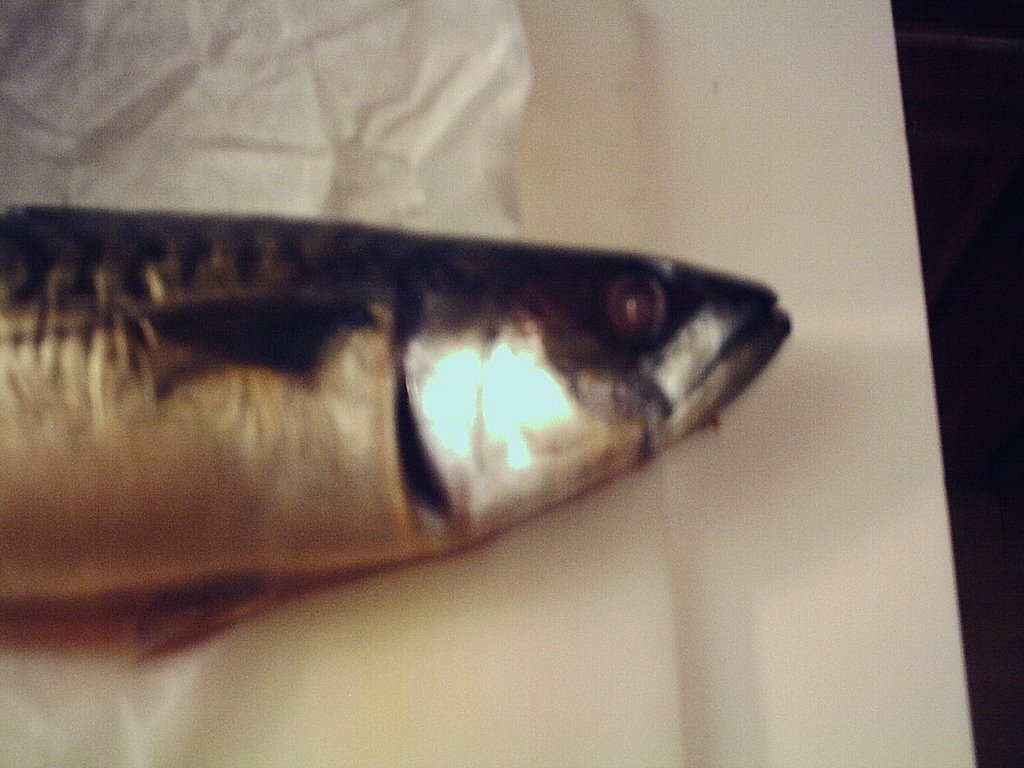
A holiday spread in this Russian household is not complete without some sort of smoked or salted fish. Some go for herring, salty and traditional. I go for mackerel, smoky and creamy. Last week my mom bought a whole hot-smoked mackerel at the Russian store. It came with a tail, a head, and sad, pleading eyes. I was unmoved.

My mom and I cut the fish into sections, removed the skin and bones, and dug in. You can eat smocked mackerel spread on rye bread, with slices of cucumber and tomato. Or you can pick up the soft, fatty chunks with your fingers and pop them in your mouth, letting the fish melt on your tongue.

The week before Thanksgiving I thought about smocked mackerel, a lot. When Nov. 22 arrived, I tiptoed around the fish, ensconced in the fridge for the guests, like a cat. By late afternoon, I proclaimed it time for a pre-dinner snack. Don't worry; I refrained from eating with my fingers. The holidays call for a nicer presentation.

Method:

You will need a hot-smocked mackerel fillet (sold at Russian groceries), cleaned of skin and bones, and cut into chunks. (If you get squeamish around whole fish, you can sub smoked trout or salmon fillets).

Toast some thinly sliced dark rye or wholemeal bread. Spread with a thin layer of unslated butter.Top with a thin slice of cucumber, a thin slice of tomato, and a slice of mackerel. Or skip the tomato and top with thinly sliced red onion. Use the leftover mackarel to make Beyond Salmon’s delicious looking smoked fish chowder.

Thursday, May 31, 2007

Memorial Day Eats

I'm still around, and up to my old tricks. Namely, kebabs. (Or, if you prefer, Caucasian shashlik.)

Eggplant caviar.

And, of course, beets. That's creamy beet salad there.


Sunday, November 26, 2006

Thanksgiving Scenes

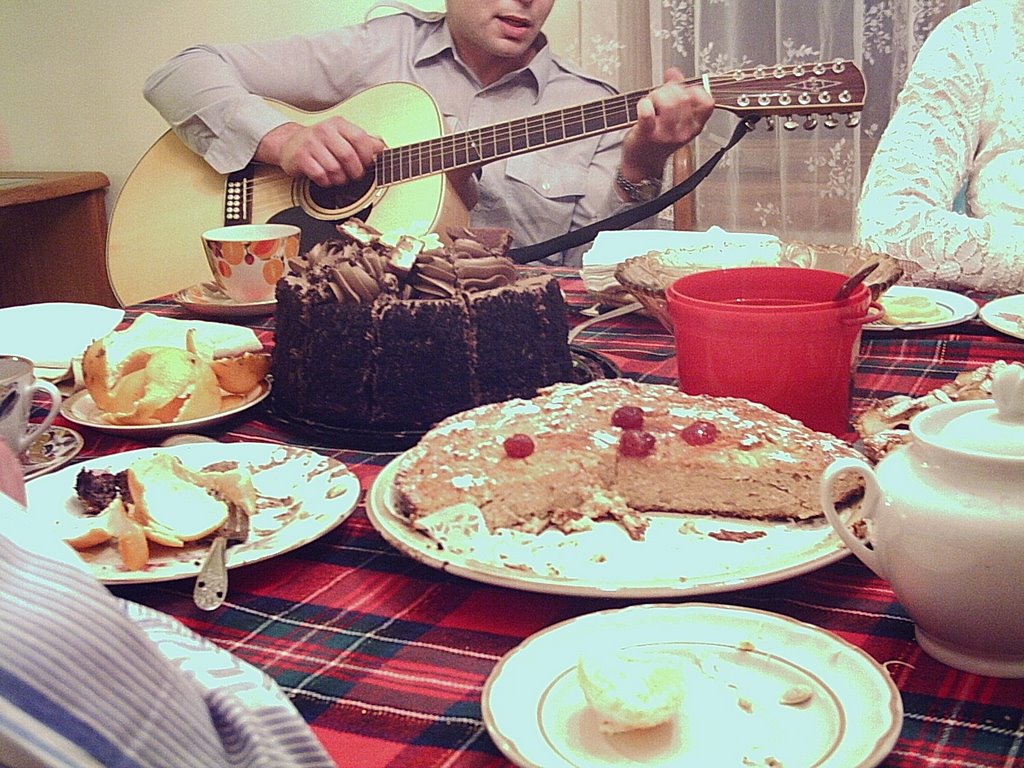
I did very little cooking this Thanksgiving but I dutifully chronicled dinner at my parents'. Those not in on my blogging were amused that I took pictures of food instead of people.

Making seledka pod shuboi--herring in a fur coat. This may be the Russian version of seven layer salad. Diced smoked herring is on the bottom, topped with diced cooked potatoes, carrots, and beets, hardboiled eggs, a tart apple, and mayo/sour cream dressing.
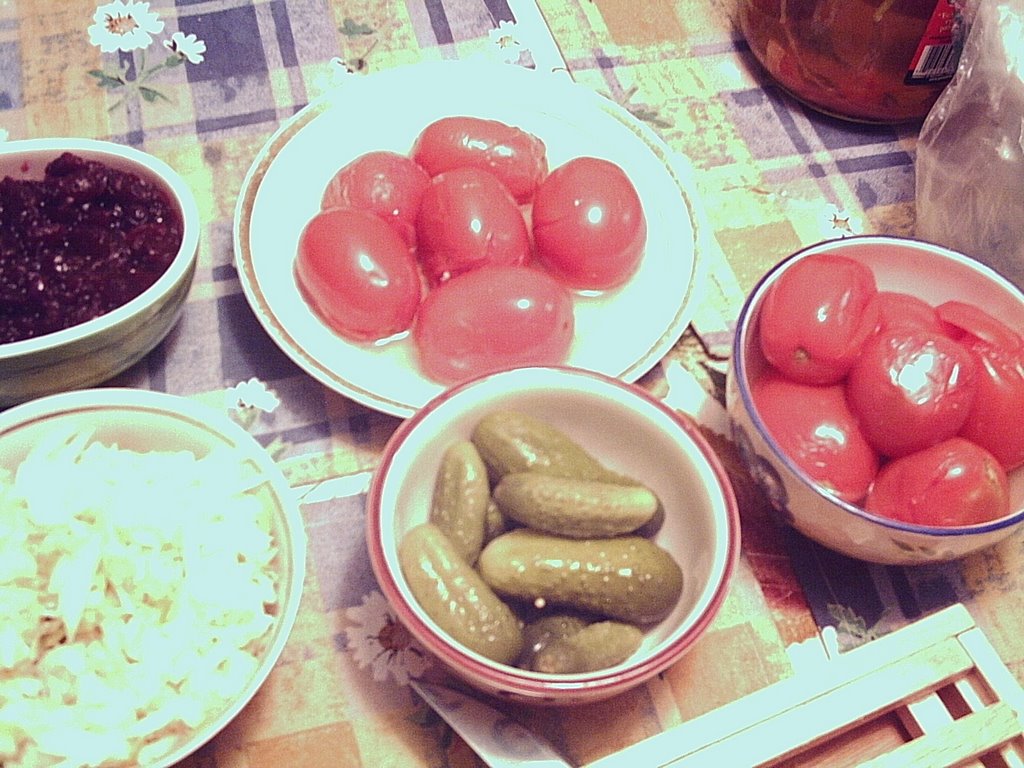
The sides: marinated tomatoes, homemade sauerkraut (my parents' was better than mine), cranberry sauce, and pickles. The marinated tomatoes were awesome; I always buy them at the Russian store. I can't remember the name of the brand I like best--it's the one with a red-nosed, drunken-looking babushka on the label. I could eat these sweet and spicy tomatoes like candy.
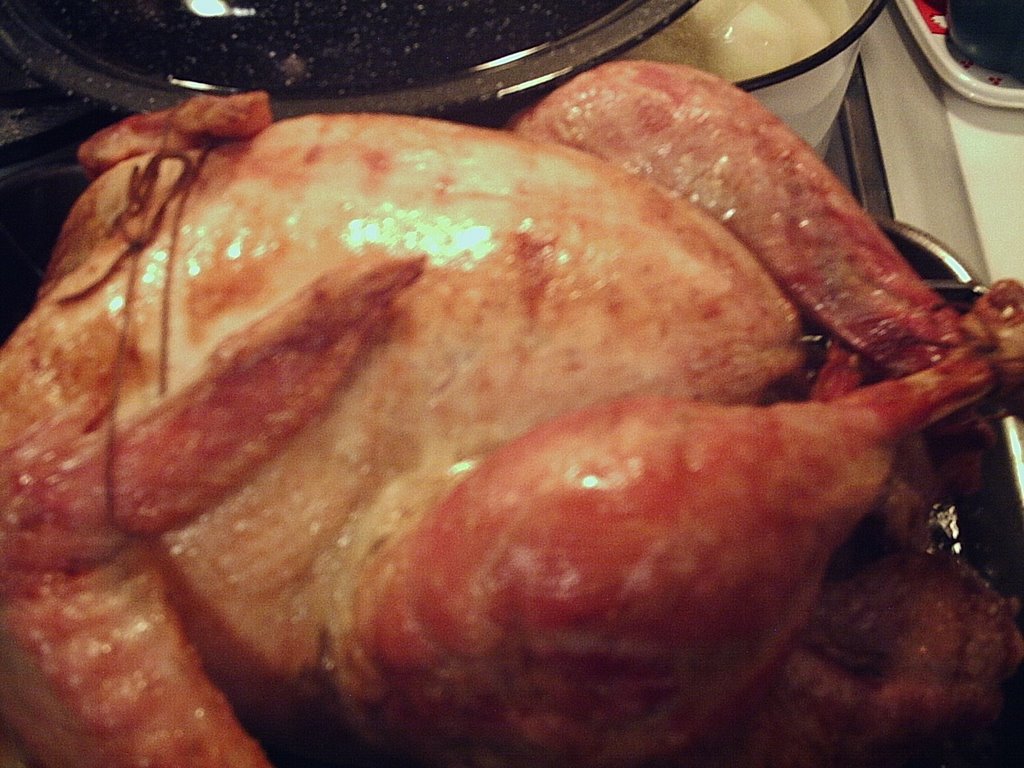
The beast:

Does this say Thanksgiving to you? That's smoked mackarel, part of the appetizer spread. Fatty and yummy.
Dessert: An apple charlotte and curd cheese cake with grated apples (pictured below), recipe courtesy of the blog Nami-Nami. The curd cheese cake was excellent: light, fluffy, not too sweet; a great use of farmer's cheese.
After dinner entertainment: Russian pop songs. The only one I recognized was Dark Eyes.
Related Posts with Thumbnails