Americans often assume that Russian immigrants, many of whom are Jewish, celebrate Hanukkah. This isn’t so in my experience. Hanukkah is a totally foreign holiday for Russians, most of whom weren’t aware of its existence before coming to the U.S. I remember my mom dutifully lighting a menorah, given to us by Jewish Family Services, our first year here. This ritual was unusual; her heart wasn’t in it. We put up a tree, which shocked the Jewish Family Services volunteer who was helping us adjust to life in the States. “A Christmas tree?” he said, arching his eyebrows. My mom shot back that it’s a New Year’s tree, not a Christmas tree. Next year, the menorah stayed in the box.
In my family New Year is not as big a deal as it was back in the old country. When we came to the U.S. I wanted to celebrate Christmas, like the rest of the kids at school. I wanted a Christmas tree put up in early December, not a few days before Jan. 31. I wanted to open presents on Christmas morning. I wanted stockings hung above a fireplace and Christmas carols and all the rest. My parents weren’t terribly enthusiastic about the whole thing, but they obliged me. Later, however, they had American friends who did celebrate Christmas, so we got invited to quite a few Christmas dinners over the years. Having a big dinner and exchanging presents on Christmas day stuck.
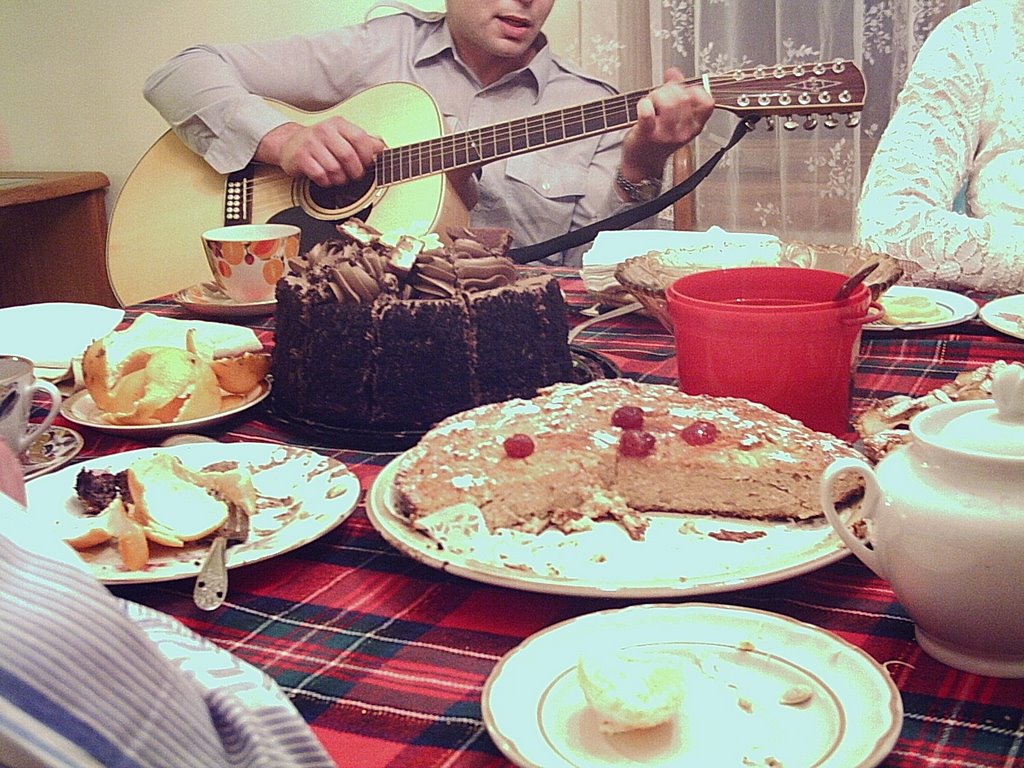
Taking up new traditions doesn’t mean you give up the old ones. We still celebrate New Year Russian-style these days: that is, we sit around on New Year’s eve and eat. The best part of a Russian New Year is the food, usually a buffet of appetizers and snacks, chased down by vodka. According to my dad, this was more fun in Soviet Russia, where a food-laden table on New Year’s made a pleasant contrast to daily food shortages. You stood in line for hours on Jan. 31 to buy a pineapple; you ran all over town to find this or that delicacy. Why get excited about stuffing your face here in America, where you can buy pineapple year-round and eat more than your fill every day?
I say because it’s a pleasant tradition. I have to note, though, that our New Year's feasts have gotten smaller and smaller every year. Here’s what we had this year:
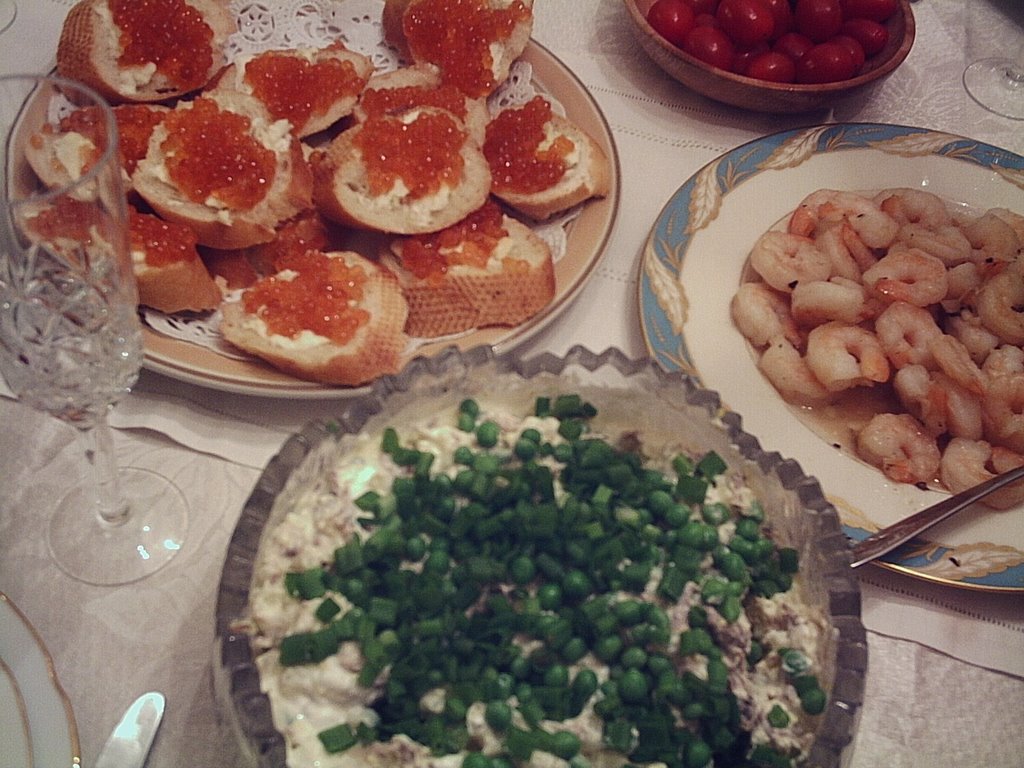 Red caviar canapes. Slice a baguette into rounds, spread a little softened butter on each slice and top with a teaspoon of caviar. Below is potato-beef salad, a classic Russian winter salad. Cook a piece of beef chuck as if making stock. Cut the cooled meat into cubes, combine with cooked, cubed potatoes, cucumbers, pickles, green peas, parsley and a mayo-based dressing. To the right is shrimp and cocktail sauce. Oops, that’s quite American.
 Eggs stuffed with sautéed mushrooms and onions.
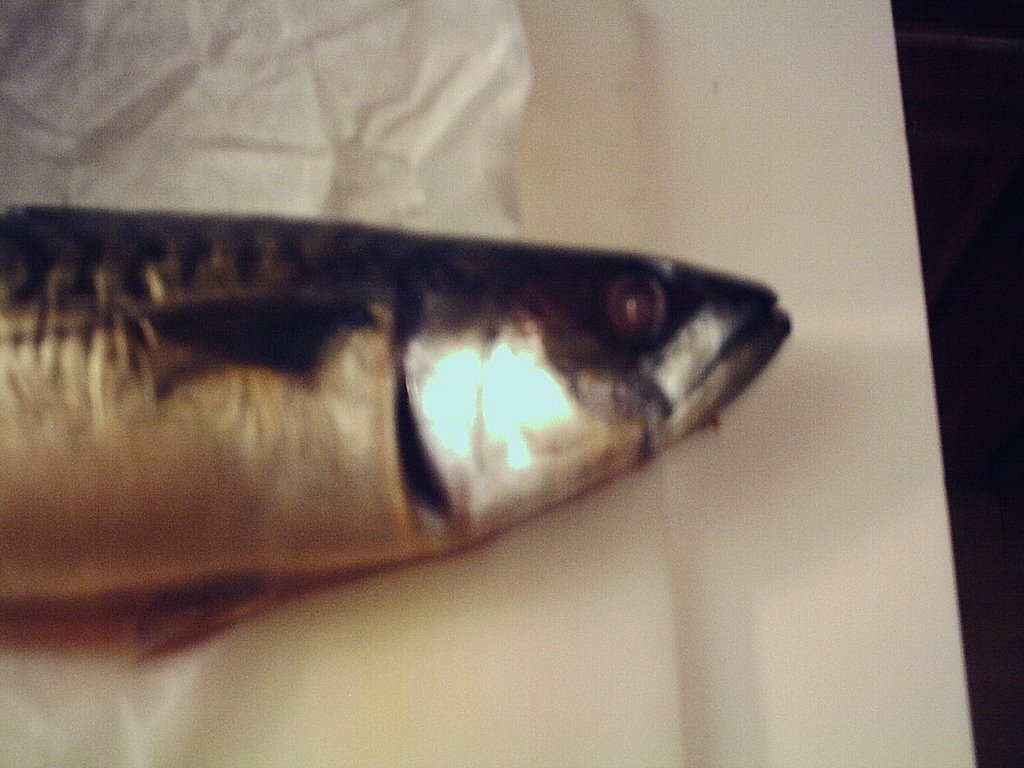
 That's smoked eel beneath the pickles. I prefer smoked herring.
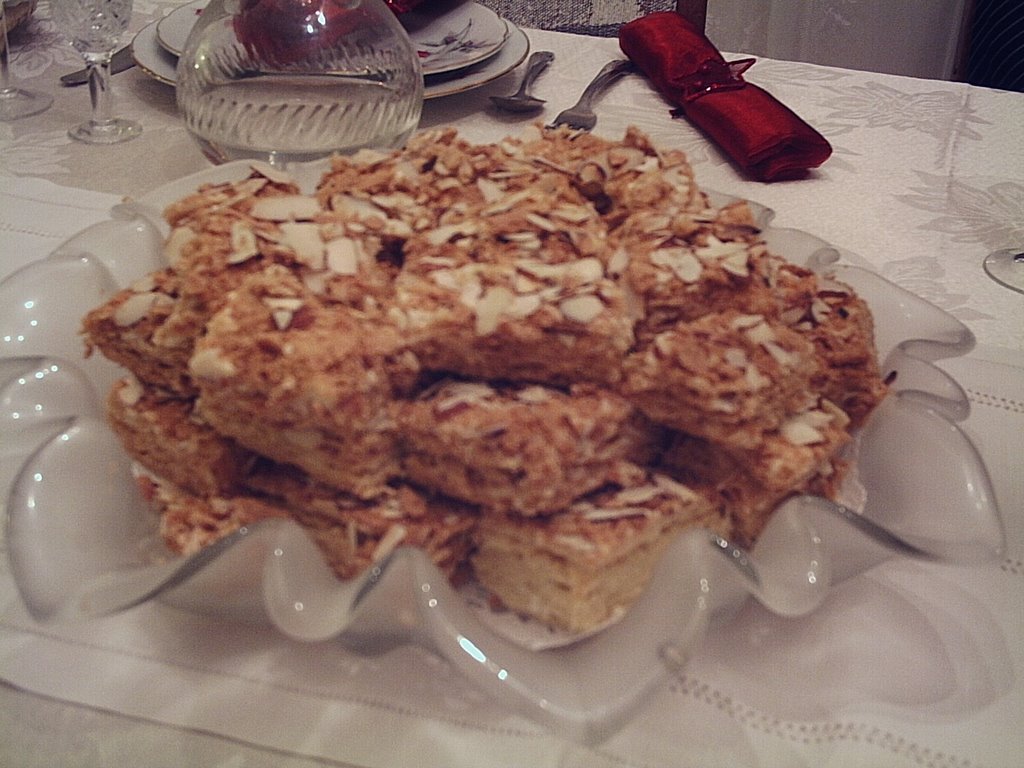 Napoleon, a once-a-year treat. I wrote about it here.


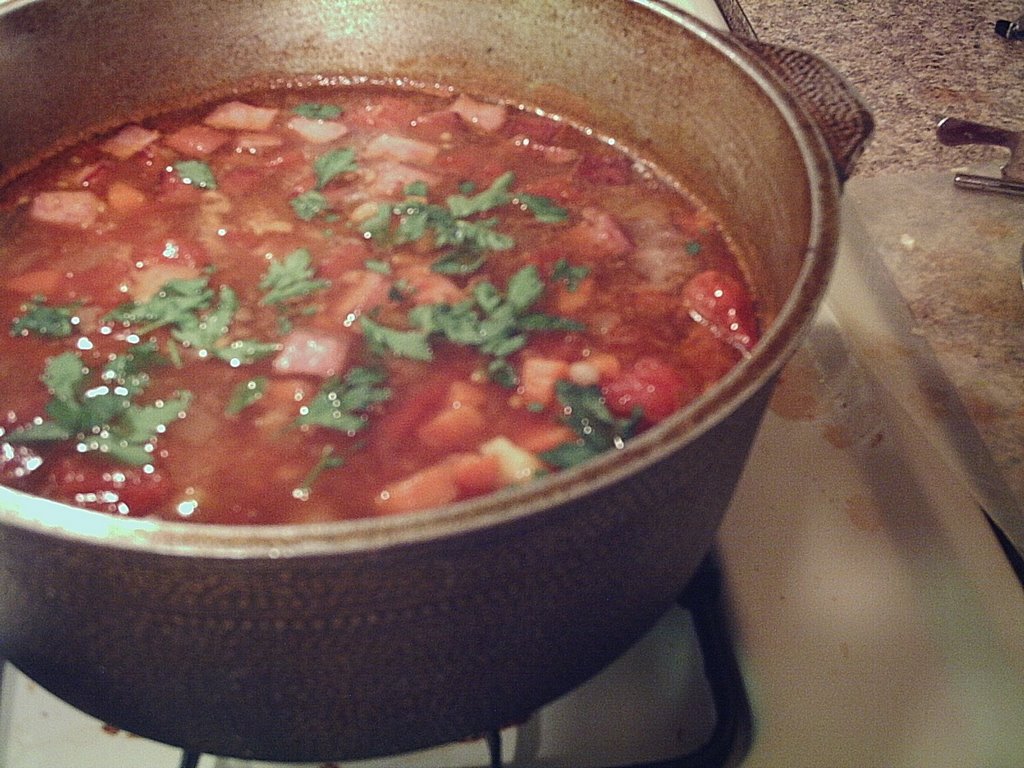

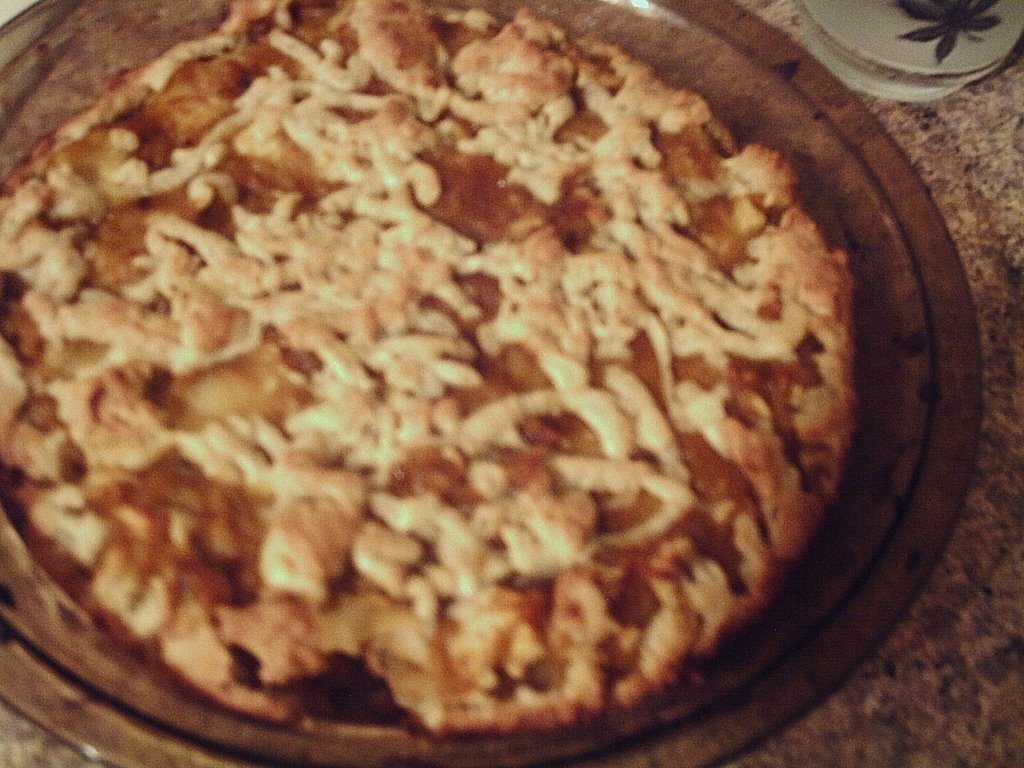
 The sides: marinated tomatoes, homemade sauerkraut (my parents' was better than mine), cranberry sauce, and pickles. The marinated tomatoes were awesome; I always buy them at the Russian store. I can't remember the name of the brand I like best--it's the one with a red-nosed, drunken-looking babushka on the label. I could eat these sweet and spicy tomatoes like candy.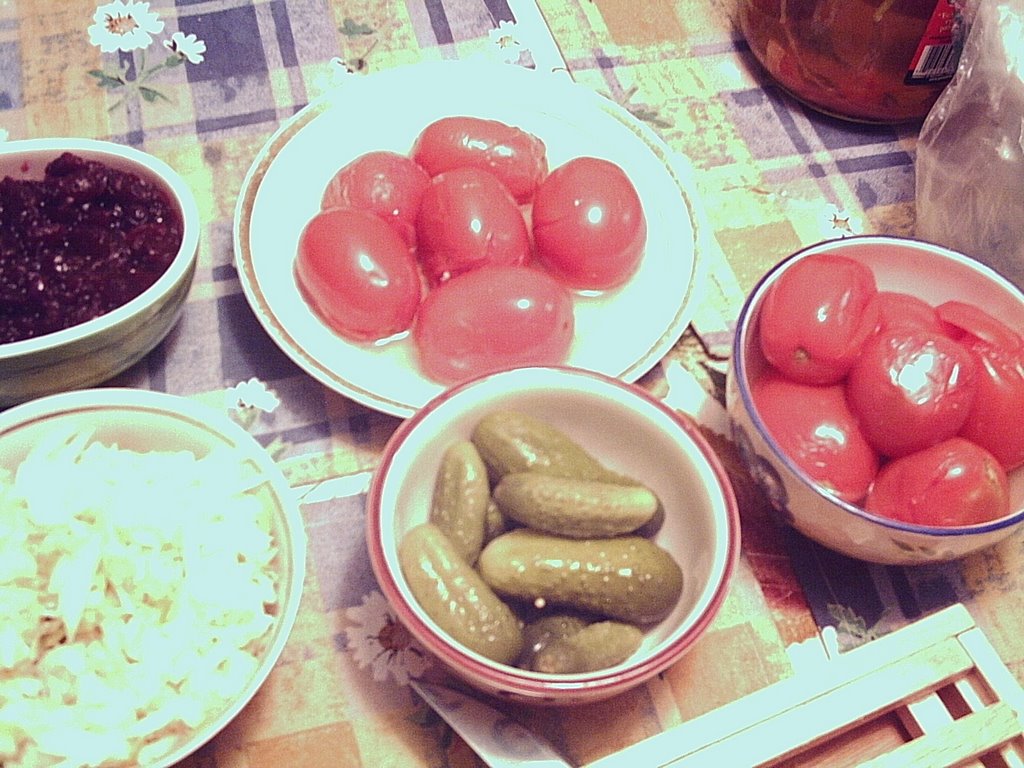




















 Posts
Posts