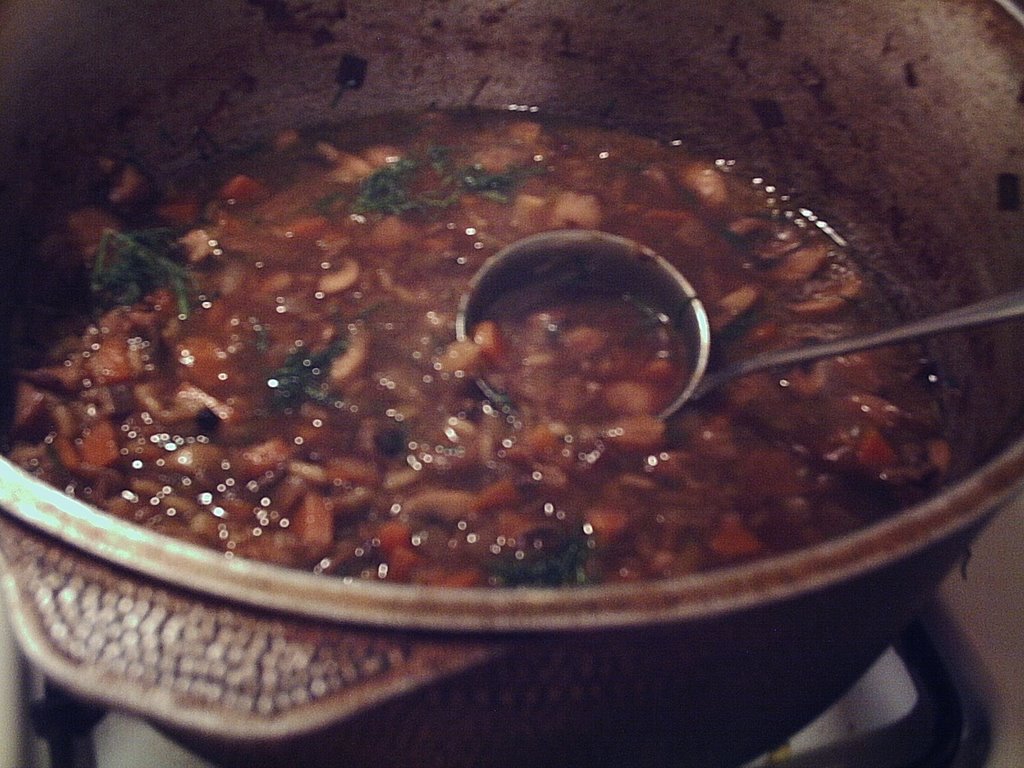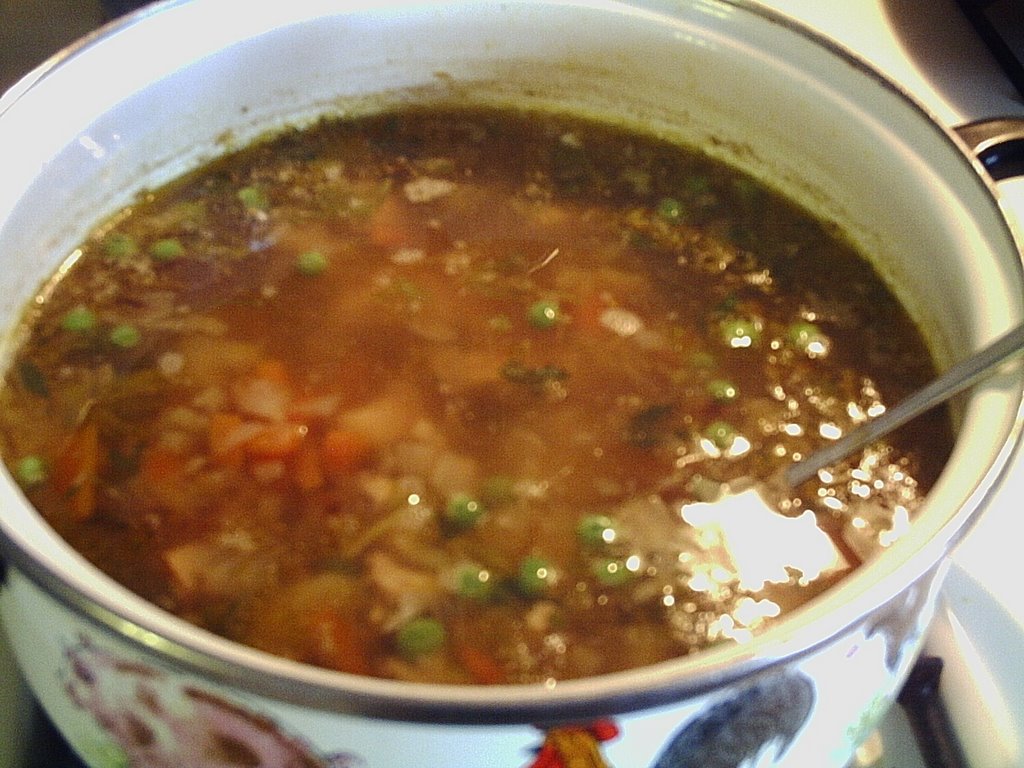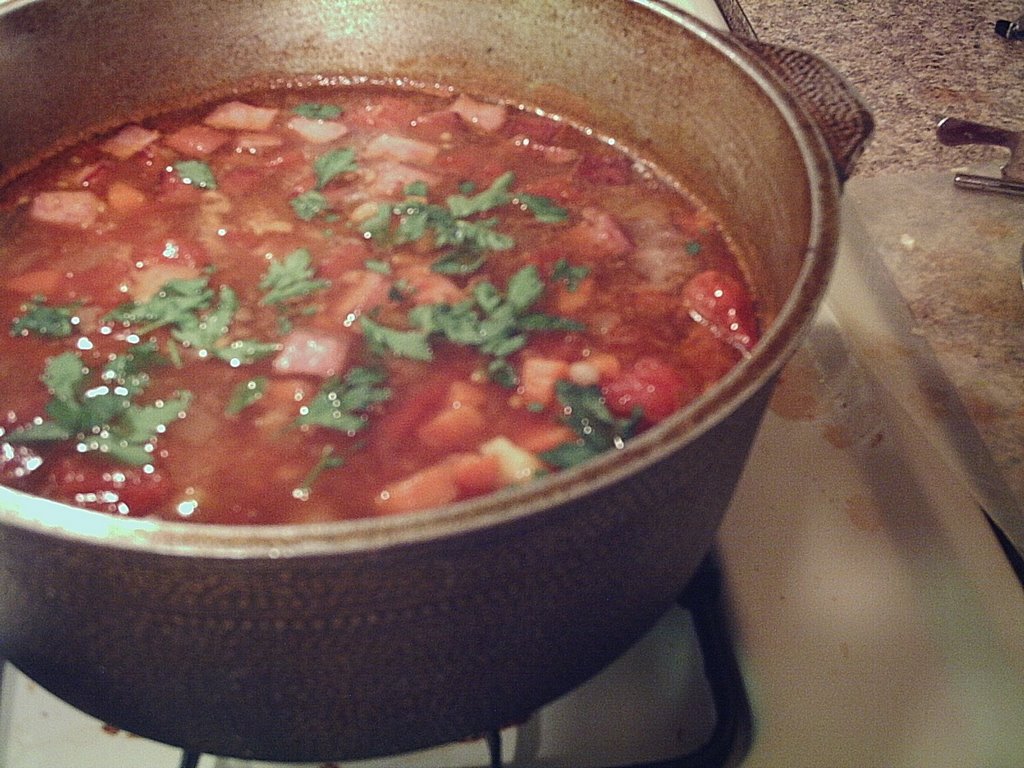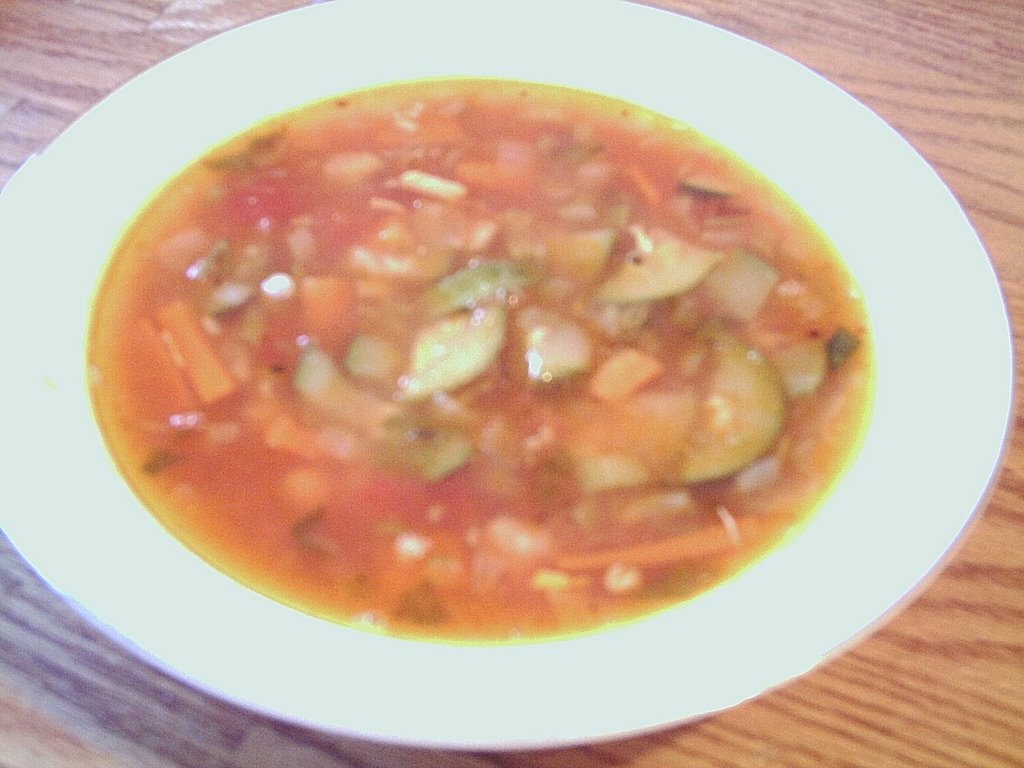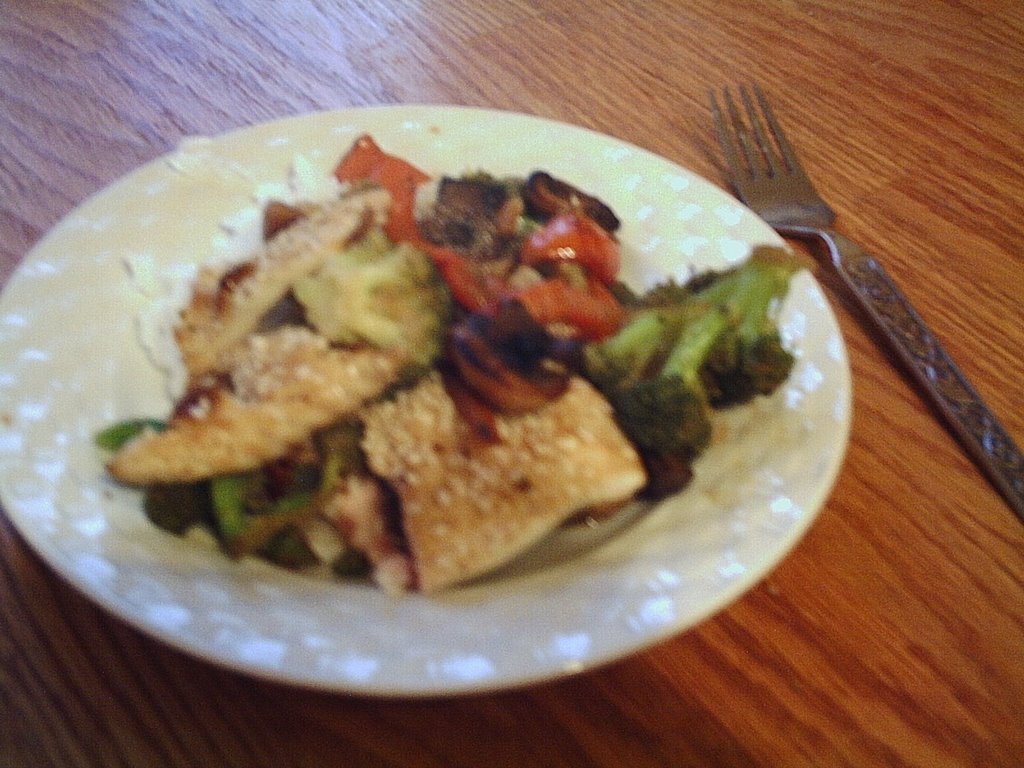
Showing posts sorted by relevance for query soup. Sort by date Show all posts

Monday, March 10, 2008

Soviet Kitsch: Soup

It’s time for another installment of Russian Retro Recipe Cards. This time, the topic’s soup. I've documented Russians’ love of soup pretty thoroughly on this blog, but I’m always surprised by the variety and the sheer oddness of some soups described in Russian and Soviet cookbooks. Let’s take a look at a few (from Soviet soup recipe cards circa 1988): Got random processed meat products in the fridge? Here's the soup for you: solianka, which one Russian cookbook author calls "mixed-up meat soup." This basically a beef-based vegetable soup with chunks of sausage, hot dogs, bacon, etc. Every soup needs a side: above are potato dumplings. I think the best side, good rye bread aside, is homemade pirozhki.
Fruit soup! Rhubarb-apple-strawberry soup, with a side of marinated apples (yes, you can pickle apples) and slices of lemon. This is served cold in the summer.
Milk soup--hot milk with rice or pasta, served with a pat of butter in the middle of the bowl. I think of this as comfort food, even though I've got no good reason to eat it anymore (milk, carbs and butter will no longer make me grow big and strong, alas). This is food for when you're sick with a cold or flu.
Some sort of fish soup. Is that smoked herring to the right?
That's 24-hour schi (sauerkraut soup). Schi is usually made a day in advance to allow the flavors to settle, but this recipe has you freeze the soup for a day and then defrost and heat before serving.

Thursday, November 08, 2007

Mushroom Vegetable Soup with Israeli Couscous

When I resurrected this blog, I considered going with a soup theme. All soup, all the time. Now, this is the month when most people start thinking about soup. Not I. I think about soup all year long. I've written about my Russian family's soup-eating habits here and here. To sum up: We Russkies like our soup, regardless of weather. In the steamiest of summer days we may enjoy a chilled svekolnik, but when the temperature drops to a bone-chilling 70 F, we go back to borsch and kharcho.

You can take a girl out a soup-making household, but you can't take soup-making out a girl. These days I have my own rotating repertoire of favorites, although I make different variations every time depending on what I have in the fridge. Here’s my latest take on mushroom barley soup. I happened to have a big box of Israeli couscous, as well leeks, onions, carrots and leftover broccoli stalks (which are totally edible and delicious, by the way).

Method:

Soak ½ ounce of dried porcini mushrooms in ½ cup of water overnight, or at least for 3-4 hours. Use a slotted spoon to remove the mushrooms. Put them in a bowl and cover with some cold, fresh water. Let stand for several minutes minutes to let the grit settle at the bottom. Remove the mushrooms, and repeat this step twice more with fresh water. Strain the mushroom water through a coffee filter until it’s free of grit and sand. Reserve the mushrooms and the liquid for later.

Chop up 8 oz. of white button mushrooms. Heat up some olive oil in a skillet and sauté the mushrooms until they are soft and golden, about 10 minutes. Add kosher or coarse salt to taste. Set aside. Chop up a large onion, a large carrot, and half a leek. Peel and coarsely chop the broccoli stalks. Finely mince 2 stalks of celery and a couple of garlic cloves.

Heat up some olive oil in a soup pot and sauté the onion, carrot, broccoli stalks, leeks and celery until the onions are soft and translucent and the broccoli is semi-soft, about 15 minutes. Add the garlic; sauté for another minute, until the garlic becomes aromatic.

Add the sautéed and the rehydrated mushrooms the soup pot. Pour in 4 cups of chicken stock, the mushroom liquid and a tablespoon or two of soy sauce to taste ; toss in a couple of bay leaves and some black peppercorns and bring to a boil. Lower the heat and let the soup simmer for 10 minutes or so. Add ¼ cup of dry Israeli couscous and simmer until the couscous is cooked, about 8-10 minutes. Adjust the salt and pepper to taste. Eat with dollops of sour cream or thick, plain yogurt.

Tuesday, January 15, 2008

Soup blogging: Ugly yet delicious spicy chicken rice soup

This is a delicious yet very ugly soup that I don’t recommend you make for company. For yourself, sure; for others, no. The original recipe, which, unlike mine, is quite photogenic, ran on a Finger in Every Pie back in November. That recipe calls for simmering lemongrass and ginger in turkey stock before adding the aromatics, shredded turkey, bok choy and herbs. When I got around to making this soup last week, I didn’t have all of the ingredients or remember the recipe instructions, but that never stops me. I wanted a gingery, spicy chicken rice soup, so this is what I came up using what I had in the kitchen.

For the stock, I used a roast chicken carcass, which I put in a crock pot with an onion, a couple of carrots, and some celery stalks, 2-3 bay leaves and a splash of white wine. All this was covered with cold water and simmered on low for about eight hours. I cooled the stock, refrigerated it and degreased it the next day. (This is the easiest, laziest way of making homemade chicken stock.)

For the soup, I brought the 6 –7 cups of stock to a simmer and tossed in a couple of 1-inch pieces of peeled ginger, 1/8 cup fresh lemon juice, and a couple of teaspoons of salt.

Meanwhile, I sautéed a large chopped onion, a couple of chopped carrots and celery stalks, and some minced garlic and ginger in olive oil. When the onion was golden and the vegetables were soft, I added them to the stock, along with ¼ cup of uncooked rice, and let the soup simmer for 9-10 minutes, until the rice was almost done. I then added a tablespoon of soy sauce, a tablespoon of hoisin, two tablespoons of chili garlic sauce (I used Blue Dragon brand, not very spicy. Adjust to taste.), and a splash of fish sauce.

I took the soup off the heat and pureed about 1/3 of it in a blender, along with some chopped scallions and basil. (Actually, I tossed in some spinach into the soup pot before pureeing by mistake, which accounts for the soup’s hideous green color. Oops. Do not do this--add your greens after pureeing). The soup went back into the pot with shredded roast chicken meat, and another splash of soy sauce, fish sauce, garlic chili sauce and lemon juice. I topped the soup with chopped scallions, but it would also be good topped with sesame seeds, sesame oil or herbs like cilantro and basil.

Thursday, December 04, 2008

Schi (Sauerkraut Soup)

Kisliye schi* is one of the weirder Russian soups. First, it’s made with sauerkraut. Second…it’s made with sauerkraut. If you aren’t from Eastern Europe, when was the last time you’ve given any thought to sauerkraut soup? Me, I’ve given a lot of thought to sauerkraut soup lately. It’s a great winter meal in a bowl. It’s easy to make. It’s cheap—recession cheap!

And yet it’ll never be as popular as, say, borsch, the ruby red prom queen of Russian food. Schi involves cabbage in various guises. It’s kind of beige in color. It has a funny name that’s hard to pronounce in English (say shee). It’s… oh, come on, it’s made with sauerkraut! As I fruitlessly Googled schi recipes a few days ago, I thought this soup didn’t have a chance on the culinary scene.

Yet there’s hope on the horizon. It turns out that in November, New York Magazine ran a recipe for sauerkraut soup served at the reassuringly chic New York diner Veselka. Deb of powerhouse food blog Smitten Kitchen actually made and liked the soup. So when I found myself with leftover Thanksgiving sauerkraut and stock last week, I decided there was no better time to make a schi of my own. In the interest of full disclosure, this is the first time I’ve ever been inspired to cook it.

I’ve cobbled together recipes from New York mag, Anya von Bremzen’s Russian cookbook Please to the Table and my mom. Some of these recipes call for ingredients as varied as wild mushrooms and tomatoes, but I’ve kept my schi simple. Here’s the method:

First, you need a nice, rich stock with chunks of meat, preferably beef or pork. Chicken stock could suffice, if it’s a good one. I used my crock pot stock made with pork ribs (see recipe here).

When you’re ready to make schi, bring 6 cups of stock to a boil in a soup pot, and then turn the heat down to a simmer. Dice the beef, pork or chicken into ½ -inch pieces.

Peel and dice a medium potato. Shred ¼ of a small cabbage (about 2 cups). In a skillet, heat up some butter or sunflower oil. Dice a small onion and a carrot, and sauté the aromatics until the onion is soft and golden, about 10 minutes.

Add the cabbage to the skillet and sauté 5 minutes. Add the vegetables to the soup pot. Simmer 15 minutes; add the potatoes the pot and simmer 10 minutes, or until the potatoes are soft and the cabbage is tender.

Add 2 cups sauerkraut and a good splash of sauerkraut liquid to the soup pot. Add the diced meat. Stir; simmer 10 minutes. Adjust salt and pepper. Mince a large garlic clove, and add to the soup pot. Serve the soup with minced parsley or dill and huge dollops of sour cream. Rye bread is good on the side.

*Updated Dec. 7: Sassy Radish correctly notes that schi is made with fresh cabbage; kisliye schi (sour schi) is made with sauerkraut.

Sunday, October 22, 2006

Mushroom Rice Soup

Proust had madeleines; I have mushrooms. When the weather is overcast, damp and warm, I often think about childhood mushroom picking trips at our dacha (summer house). Then I’m transported to some sort of a Tolstovian country idyll that is mostly a figment of my imagination.

A while back I wrote this in the comments of a post about mushrooms at The Seasonal Cook's blog:

I spent part of my childhood in Russia and my warmest, fuzziest memories are of mushroom picking in the country. I think my parents taught me to identify different types of mushrooms when I was 5 or 6. We would mushroom picking in the forest on damp, rainy days ('cuz rain makes mushrooms sprout, I was told.) I remember being so excited as a kid when I found the good eating mushrooms. I got even more excited when I spotted the poisonous moohamor--"death to flies," literally. This mushroom had a bright red cap with yellow dots.
We also picked lots of lisichki, or little foxes (chantarelles). I don’t know the English names of all the other mushrooms we found, and I’d be surprised if they even grow in North America. Here are some translations for the mycologists from this BBC article: Bely or Borovik mushroom (Penny bun boletus), Opiata (honey mushroom), Podberyozovik (Rough birch stock), Masliak (Slippery jack) and Ryzhik (Saffron milk cap).

Mushrooms soup is still my favorite way to use mushrooms. Lately I’ve been craving Russian soups, partly because fall calls for rich, earthy food, and partly because I’ve been itching to do some cooking that reflects this blog’s theme.

My ideal mushroom soup has both dried and fresh mushrooms, so I based it on a recipe from Beyond Salmon and a mushroom noodle soup from Anya von Bremzen’s Please to the Table. Admittedly, mushroom rice soup doesn't sound all that Russian, but the boyfriend claims to hate barley. Nearly all Russian soups also call for potatoes, which I've left out here. I think that starch with starch is overkill, especially if you have a desk job.

This mushroom rice soup was really pretty good, if a little too rich. I suspect that my homemade chicken stock was at fault. It’s been ingrained in me that you make soup with stock—beef, chicken, even vegetable—but never water. So I avoid water-based soups in fear that they’ll taste flat and, well, watery. Am I wrong?

For the soup, I soaked ½ ounces dried porcini mushrooms in ½ cup of water for two hours. I strained the water through a coffee filter and reserved it for later. If you’re smart, you’ll run your mushrooms through several changes of water to get rid of the grit. If you’re me, you’ll do that after you nibble on a mushroom and end up with a mouthful of dirt right before you’re supposed to toss the mushrooms into the soup pot.

I warmed up the diced aromatics—a small onion, half a leek, half a large carrot, a garlic clove—in some olive oil and butter until the onions were translucent. Then I added 2 cups of sliced, fresh mushrooms, and sautéed all the vegetables for 10 more minutes. I added the chopped, re-hydrated dried mushrooms; mushroom stock and 3 cups of chicken stock; 2 bay leaves and couple of peppercorns. All of this simmered for 20-25 minutes, after which I added 2-3 tablespoons of dry rice. The soup simmered for 15-20 minutes more, until the rice was done. I tossed in a bunch of chopped dill before serving and we ate the soup with dollops of sour cream.

Friday, January 19, 2007

"Beefy and Beety" or, On Borsch

Behold, my first borsch. Not the first I’ve ever had, of course, but the first one I made all by myself. I tried to make an authentic borsch-—beefy and beety—-and I think I succeeded.

Whenever I cook something Russian, I consult my usual sources: my mom, Anya von Bremzen’s Please to the Table, Helen Rennie (who occasionally posts authentic and yummy-looking Russian recipes) and two other Russian cookbooks I own (not nearly as good as von Bremzen’s). I’d bet that every Russian family has its own way of making this beet and cabbage soup, and I cribbed ideas for my borsch from at least half a dozen recipes.

The ingredients and proportions I got from von Bremzen and Helen; the technique is mostly my mom’s. As usual, I did not measure my ingredients precisely, so this is more of an annotated field guide than a recipe. Finally, if you’ve never had borsch, please don’t let the words “beets” and “cabbage” scare you. Borsch is not a boiled vegetable soup; when made correctly, it is hearty, beefy and zesty.

For the stock, which I made a day in advance, I used a pound of beef chuck, a couple of beef marrow bones, a soup bone, and some carrots and onions. These I covered with 4-5 quarts of water, brought it to a gentle boil, and then simmered for three hours, removing the scum from the surface as necessary. Quite a few recipes suggest using a ham bone in the stock as well, a good idea. The stock served its purpose, but I next time I want something meatier and beefier. I used too much water, too—3 quarts is enough, I think. Anyway, once the stock cooled, I refrigerated it overnight.
While I was making stock, I washed and trimmed 3 medium beets. I covered them with water in a saucepan and simmered them for 50-60 minutes. Beets are done when you can pretty easily pierce them with a knife.

The next day I degreased the stock, threw out the bones, cut the cooked beef chuck into 1-inch cubes and added it back to the stock. I brought about 3 quarts of stock to a simmer in a big soup pot. Why three quarts? My big soup pot wasn’t nearly big enough to hold all of it (see above photo). The rest of the ingredients turned out to be proportionate to the amount of stock I did use, though.

While waiting for the stock to come a simmer, I grated the beets and put them in a saucepan with a 14-ounce can of crushed tomatoes, half a 6-ounce can of tomato paste, a big pinch of salt, sugar, and a splash of red wine vinegar. I simmered this on low heat, stirring occasionally. Did you know that beets and tomatoes are surprisingly delicious combination?

When the stock came to a gentle boil, I added a bay leaf and 3 medium peeled and cubed potatoes to the soup pot. While the potatoes were cooking—about 15-20 minutes—I finely shredded ½ pound of cabbage (about ¼ head of a medium cabbage). I also diced 2 big onions, 4 medium carrots, a green pepper, and crushed 4 cloves of garlic. ( A note on the green pepper: my mom’s and von Bremzen’s recipes call for it; others don’t. I say, use green peppers if you like them—I do—and forget them if you don’t. )

When the potatoes were almost done, I added the cabbage to the soup pot. Meanwhile, I sautéed the onions, carrots and pepper in sunflower oil until the onions were soft and golden—15 to 20 minutes or so. I stirred in the garlic at the end. When the cabbage was soft, about 20 minutes later, I added the aromatics to the soup pot, along with a tablespoon and a half of salt. All this simmered for 5 minutes, then the beet/tomato mixture went into the pot. I let the soup simmer for 10 more minutes. I also added a small handful of black peppercorns to the pot.

Then I came to the part when, in my family, everyone stands around the soup pot and tastes the borsch while my mom asks, “What’s missing? Salt, sugar, acidity?” My borsch was missing all of these, so it was time to add a little of each, stir, taste again, and repeat until satisfied. I put some more tomato paste into a little bowl, along with a splash of tomato juice left over from the canned tomatoes, a splash of vinegar (substitute lemon juice), a splash of soup liquid, a dash of sugar and salt, and a heaping teaspoon of so adjika.

Adjika is a very spicy Georgian vegetable relish that’s sold in Russian/Eastern European stores. Do borsh recipes generally call for adjika? No. Can you use it to give your borsch a little kick? Yes. My mom sometimes uses lutenitsa, a vegetable spread, also sold in Russian groceries. Should you use, say, salsa, to flavor your borsch? I say no; it’s not at all authentic. Can you use a vegetable fix-in of Eastern European origin? I say yes, if it’s tomato-and-pepper-based. Don’t worry if you have neither adjika or lutenitsa; all you really need is tomato paste, sugar, salt, and vinegar or lemon juice.

I’d estimate that I used 2 teaspoons of sugar, a tablespoon of vinegar, and a 6-ounce can of tomato paste to flavor my borsch. Taste and repeat, taste and repeat. Before serving, try adding a couple of raw, crushed garlic cloves to the pot. Borsch should strike a nice balance between sweet and sour, tomato-y and beety, salty and zesty, with a little kick that comes from the crushed garlic or adjika.

Serve borsch with chopped dill or parsley, and sour cream. Bread is essential; good rye bread is preferable. Everyone tells me that you’re supposed to stir sour cream into the borsch, but I like to leave a thick clump in the middle of my soup bowl and swipe at it with each tablespoon. This borsch is even better on the second day, keeps for a week in the fridge, and feeds a small kolhoz.

Sunday, January 20, 2008

The poor and lazy man's fish chowder

The road to the poor and lazy (wo)man’s fish chowder:

Three months before you make this soup: Stock up on frozen tilapia. Buy lots and lots of it, more than you’ll ever want to eat. Hey, it’s a) cheap, b) healthy, and c) a no-brainer to cook. (When you start making more money your tilapia consumption will fall drastically, as you’ll be able to afford more exciting seafood.) Nothing against tilapia, mind you. It’s a perfectly pleasant fish that you’ll be thoroughly sick of by the time you’re ready to make this soup. You can also substitute cod.

Two months: Start keeping an eye out for specials on shell-on shrimp. Eat most of the shrimp, but save and freeze the shrimp shells in a Ziploc bag. Try to save up about 3-4 cups of shrimp shells. Don’t forget to freeze some shrimp for the soup, you glutton.

Two weeks: You should really clean out your freezer. Did you know that you have tilapia that’s been in there for God knows how long? Maybe you could do something new and different with it. Think about that. Look up some recipes.

One week: Remember those shrimp shells that you froze, like, months ago? Don’t they look disgusting? Remember how you’ve been meaning to do something new and creative with them, like make shellfish stock? Why don’t you try that? Go look up half a dozen recipes for shellfish stock.

Two days: You’re planning to roast the shrimp shells before lovingly simmering them for hours with aromatics, like more ambitious bloggers? Ha. No, you’ll actually toss the shrimp shells in a crock pot. You can make shellfish stock in a crock pot, right? Googling “fish stock crock pot” proves inconclusive, but whatever. Cover the shrimp shells with water, and add a splash of white wine and some carrots, celery and onion, and simmer on low for eight hours. Cool, strain, and pour into containers and freeze. Wasn’t that easy? Don’t you feel like a good, virtuous little housewife? Oh, and don’t forget to air out your apartment.

Fish chowder day: Pick a bitterly cold day. Soup tastes better on a cold day. Get out your shrimp stock, shrimp and tilapia. Sauté some chopped onions, carrots, and green pepper in olive oil on medium-high heat in a heavy soup pot. Lower the heat and added minced garlic, some dried thyme, red pepper flakes and salt. Deglaze the soup pot with ½ cup white wine.

Add 4 cups shrimp stock; ¼ tsp. crushed saffron threads; 1.5 cups of good canned tomatoes, chopped; 1 tsp. sugar; and a couple of bay leaves. Bring to a boil, then lower the heat and let the whole thing simmer for 10 minutes.

Add a tilapia fillet (about 8 oz), cut into chunks. When the tilapia is done, in about 4 minutes, add about ½ cup of shrimp (about 4 oz). Simmer the soup for a couple of more minutes, and add 2 tbs. chopped basil, a splash of lemon juice, and a pinch each of salt and sugar. Top the soup with chopped parsley before serving. Eat with crusty bread or over rice. Want more starch? You could even make this with potatoes (add some peeled potatoes, cut into ¾-inch chunks, to the simmering shrimp stock. Cook until the potatoes are done before adding the tomatoes and other ingredients.)

Post-soup: Feel virtuous. Rub your belly. Glow. You’ve made a delicious soup out of boring frozen fish and gross-looking shrimp shells. You’re a resourceful and creative cook. You rule. Your fish chowder rules. Peace.

Monday, November 05, 2007

Chana Masala Soup

I like creamy tomato soup a lot, and I often make a vaguely Italian version with onions and carrots as aromatics and basil and thyme as spices. The other day I was looking at Orangette's recipe for tomato chickpea soup. I had chickpeas, I had tomatoes… and I had fresh ginger and spices left over from cooking projects of yore. So I made something I called chana masala soup—the liquid version of Indian spiced chickpeas with tomatoes. My spice blend, like every other “ethnic” dish that comes out of my kitchen isn’t remotely authentic, but I was very pleased with the soup. It’s a rich, aromatic tomato puree full of creamy chickpeas, just spicy enough to warm your mouth.

Method:

Soak some dry chickpeas. Sure, you can use canned chickpeas, but they really taste better if you cook them yourself, something I discovered when I started making my own hummus. It’s more time consuming, but requires almost no effort on your part. Soak 3/4 cup of chickpeas overnight. Add a couple of teaspoons of baking soda to the water —it’ll help the chickpeas cook faster. Rinse the soaked chickpeas, put them in a saucepan and cover with water. Bring to a boil, add a dash of salt and simmer over medium heat until the chickpeas are soft, about 1 hour.

I heated up a couple of tablespoons of olive oil in a heavy soup pot, then added a large, chopped onion, a finely chopped carrot and a stalk of finely chopped celery. I sautéed the aromatics until the onion was soft and translucent (about 10 minutes), and added 2 garlic cloves and a 1-inch piece of ginger root, finely minced together almost into a paste. I sautéed for a few more minutes until the ginger and garlic turned fragrant.

I turned up the heat and added 1 tbs. of garam masala, 1 tsp. of ground cumin, 1 tsp. of ground coriander, 1 tsp. of turmeric, and ¼ tsp. of cayenne, frying the spices for several minutes . Next I added a 32-oz can of whole, peeled San Marzano tomatoes, breaking up the pieces with a spoon and 4 cups of chicken stock. I brought the soup to a boil, and then turned down the heat and let it simmer, partially covered, for 15 minutes. I took the soup off the heat and pureed it in batches in a blender, then poured it back into the soup pot. I then added 1 tbs. of brown sugar (skip if your tomatoes are sweet enough), 1.5 tsp. of coarse salt and about ½ cup of plain yogurt, stirring until the yogurt dissolved. I added the cooked chickpeas to the soup and heating it for serving.

Tuesday, December 05, 2006

Middle Eastern Lentil Soup

I don't usually get excited about vegetarian lunch buffets, but I love the buffet at local Middle Eastern restaurant Casablanca. I've been to Casablanca for dinner, too, and it was fine, but the menu wasn't nearly as interesting as the lunch selections. Such as, for example, chunks of buttery braised cabbage with cumin and lemon juice. And veggie stew made with eggplant, peppers, tomatoes and potatoes. and spicy yellow lentil soup.

Whenever I have lunch at Casablanca I vow to recreate all these dishes at home. (Much thanks to anyone who can point me to a good Middle Eastern cookbook or braised cabbage recipe.) Last week I made what I think was a surprisingly good imitation of Casablanca's lentil soup. I did use split peas and chicken stock instead of yellow lentils and vegetarian-friendly water/veggie stock, but the soup hardly suffered for it.

Soak 1 cup of split peas overnight. In a stock or soup pot, bring 4 cups of chicken stock to a simmer, then add the peas and cook until they're soft--about 30 minutes. Don't worry if the peas get mushy; you'll be pureeing the soup later on.

When the peas are close to being done, dice a large onion and a couple of carrots and sauté in olive oil until the onions are soft and golden--about 10 to 15 minutes. Add a heaping teaspoon of coriander and a heaping teaspoon of cumin to the vegetables, cook for another minute. Add the caramelized vegetables to the soup pot, along with a bay leaf, and simmer for 15 minutes. Add salt and cayenne to taste--I used 1/8-1/4 teaspoon of cayenne, which was plenty for me. Take the soup off the heat, remove the bay leaf and puree the soup in a blender or food processor in batches. Add more stock or a little water if it's too thick. Serve with wedges of lemon and squeeze lemon juice into the soup before eating. A dollop of plain yogurt wouldn’t be bad either.

Saturday, April 29, 2006

Salmon Soup

This cheap, fast and easy soup would make a good entry for the poverty line challenge (more on that later). Salmon soup is either my grandmother's or my mom's invention, but I'm claiming the rights. You don't need stock or fresh salmon to make this soup. You do need a can of pink salmon ($2 at the local supermarket; I checked) and the cheap vegetables everyone should have on hand--carrots, potatoes, onions, celery and frozen peas. The salmon makes its own stock as it cooks.

Bring 6 cups of water to a boil in a soup pot. While waiting for the water to boil, peel and cube 3 small potatoes. Finely chop a large onion, 2 stalks of celery and 2 carrots. When the water comes to a boil, add the potatoes and some salt; turn heat down to a simmer.

While the potatoes are cooking, heat some olive or vegetable oil in a skillet and saute the onion, celery and carrots until the onions are golden. When the vegetables are nearly done, add a finely minced garlic clove and a handful of chopped parsley; saute for 30-60 seconds. Once the potatoes are almost cooked, add the vegetables, two bay leaves and a couple of sprigs of parsley to the soup pot. Simmer.

Open a 14 oz. can of pink salmon, break into chunks and carefully remove as much skin and bones from the fish as you can. Add the salmon and the water it was packed in to the soup pot ; simmer 20-30 minutes or so. Add some frozen peas; no need to defrost them. Add salt and pepper to taste. A splash of lemon juice at the very end doesn't hurt.

P., the boyfriend, said this soup reminded him of ukha, the authentic Russian salmon soup. But P. is a shameless flatterer, so take this soup for what it is: Good, fast and about $4 for the whole pot.

Tuesday, December 26, 2006

Hearty Tomato Bean Soup With Sausage

Reader, I made the most delicious soup last week. Now, I’ve been making soup quite often for the past couple of months. I once weakly complained about having to eat soup every day when I was a kid, but I really didn’t mind that at all. I love soup and would happily eat it daily for lunch and dinner, as long as I could have some nice bread and cheese on the side.

The soups I’ve been cooking lately are semi-vegetarian, pureed concoctions. These soups are new to me--creamy vegetable soups aren’t the soups I grew up with. No, soup at home was always a chunky and meaty affair. Now that I’m living on my own, soup-making more often involves chicken stock and a blender rather than marrow bones and beef chuck. But I am not giving up on the soups of my childhood. After a round of creamy tomato and butternut squash soups, I’m back to my all-time favorite: tomato bean soup, full of rich, satisfying, stick-to-your-ribs goodness. Don’t bother serving a crisp, green salad on the side. Offer some hearty, buttered bread instead, and watch your guests slurp this stuff until they are pink-faced and sated.

I wrote up a recipe last year, but I always toy around with the basic formula. This time I added some smoked kielbasa, with excellent results.

Method: Soak a cup of navy beans in 3-4 cups of water overnight. Place the beans in a pot with 4-5 cups of water and bring to a boil, then lower the heat to a simmer. Cook until the beans are soft—60 to 90 minutes. Reserve a cup or two of the water.

Slice about ½ pound of sausage or kielbasa into rounds, heat some olive oil in a Dutch oven and saute the sausage until it is golden on both sides. I used Polish kielbasa from the Russian store, but you can use whatever sausage you like. Take the sausage out of the pot and set aside.

When the beans are close to done, heat up a little more olive oil in the Dutch oven and saute a large onion and two medium carrots until the onion is soft and golden. Add three minced garlic cloves and saute for a couple more minutes. Add the beans, two medium peeled, diced potatoes, a bay leaf and five cups of chicken stock.

Bring the whole thing to a boil, and then lower the heat to a simmer. When the potatoes are nearly tender, add a 14-oz can of good, whole tomatoes. Break them up into chunks with a spoon. Stir in a little brown sugar (this depends on acidity of the tomatoes and personal taste—I like about a tablespoon of sugar); a tablespoon of sweet paprika; a pinch of hot red pepper flakes or a dried, hot chili pepper; and salt to taste. Simmer for 30 minutes. Just before serving, stir in the sausage. Sprinkle with fresh parsley. If the soup is too thick the next day, add more stock or some bean cooking water.

Monday, April 24, 2006

Tomato Bean Soup


Helen of Beyond Salmon once wrote a funny, very true post about growing up in a Russian soup-eating family.

For as long as I can remember, my mom made soup at least once or twice a week. A week without soup was a week gone wrong. She has a dozen soupsin her repertoire, including this tomato bean soup, the family favorite. I made it myself for the first time, with some successful tweaking.

First, I soaked a cup of navy beans in water overnight. When making the soup the next day, I brought chicken stock to a boil, added the beans, and reduced the heat to low. I think I used 7 or 8 cups of stock.

I simmered the beans for about 50-60 minutes, until they were soft and tender. Then I chopped, sauteed and added to the stock pot: A large onion, two celery ribs,a big carrot, a slice of bacon, and, separately, a zucchini. A minute or two before the zucchini was done sauteeing, I added a handful of parsley and clove of garlic to the skillet, minced.

I let the whole thing simmer for 10-15 minutes while I pondered a food blogger dilemma: Do I dare use ingredients that no respectable foodie would admit to eating? You see, my mom's secret ingredients are a can of Bush's baked beans and ketchup. They give the soup its sweet-savory, tomato-y, smoky flavor. The soup was thick enough without the extra beans, but I did go with the ketchup--no regrets.

In a bowl, I mixed half a can of crushed tomatoes, a couple of big squirts of ketchup and a little sugar. I added all this to the stock pot, along with a dried, hot chili pepper. While the soup simmered some more, I decided that adding a couple of small chunks of parmesan that had been sitting in my fridge, wrapped in foil, for much too long was a good idea.

And it was.

Thursday, November 02, 2006

Fast Food

When I started grad school is August, I planned to blog about quick, easy meals. A month later, after a dozen quick dinners of pastas, eggs and sandwiches, my enthusiasm waned. That’s not to say that fast meals weren’t good—they were—but after a while they were unsatisfying. When I came home from long day of work and school, I looked forward to eating a sandwich about as much as I looked forward to reading 80+ pages of dated communication theory. Fast food*--even good fast food--is tiring after a while. Why is slow(er) food, which can be as simple of a soup or a stew—so much more filling and satiating?

For me, hot food that takes a bit of effort to prepare is almost always superior to a sandwich. Maybe it’s the way I was brought up—until my parents moved to America, real food was a three-course meal consisting of soup (such as borsht), a main dish (meat & starch), and a dessert (fruit-based). Sandwiches and quickies like eggs were considered food for bachelors, students and the lazy. My mom still wrinkles her nose at the thought of sandwiches as a meal. “That’s not food,” she says. “You eat a sandwich and you’re hungry an hour later!” These days, of course, my mom hardly ever serves the Old-World three-course meal. Sandwiches, however, are still frowned on at her table.

I myself have nothing against sandwiches, but I do prefer to cook something when I’m short on time. ( I could get so much more done if I just ate some yogurt while getting a head start on my reading.) I present the following quick meals, which range from perfectly acceptable when you're hungry to totally satiating and satisfying.

*Pasta with roasted cherry tomatoes, leeks and a poached egg. Roast some tomatoes and leeks for this tart. Realize that you will not be making a tart anytime soon. Cook some pasta while gently heating up the veggies in a skillet. Poach an egg, keeping in mind that you want a runny yolk. Drain the cooked pasta, add it to the vegetables, put the egg on top, mix the whole thing up with a fork, and eat. Time: 15 minutes, not including roasting.

*Tilapia roasted with Asian-style vegetables. Stir-fry some vegetables. I used green beans, red peppers, julienned carrots, mushrooms and garlic. Add some Asian sauces--soy sauce, hoisin, sweet and sour sauce, etc. Put the veggies in a baking pan. Sear a couple of tilapia fillets on both sides; then place the fish over the vegetables and sprinkle with sesame seeds. Roast until the fish is done. Eat with rice. Time: 30 minutes, tops.

*Creamy tomato soup, based on this recipe. This is the closest I’ve gotten to slow food in a while, but this soup is delicious and satisfying. It sates hunger; it fulfills the desire to cook. I warmed up a hodge-podge of aromatics—a chopped onion, half a leek, a couple of shallots, a small carrot, a couple of garlic cloves--in olive oil in a dutch oven. I added salt, thyme, dried basil and some red pepper flakes. Then I added a splash of white wine, two chopped, peeled fresh tomatoes and a 15-ounce can of San Marzano tomatoes, as well as the chicken stock—2 cups, maybe. I brought the soup to a boil and then reduced it to a simmer .

The above recipe calls for 1 tablespoon of brown sugar, but my soup needed about 2 tablespoons of sugar to cut the acidity. I added the sugar bit by bit, simmering and tasting. When the soup was almost done, I pureed half of it in a blender, then added it back to the soup pot along with 1/3 cup of half and half and a couple of tablespoons of sour cream. Time: 1 hour, including prep time.

*When I pick up lunch at work I always get suckered in by the “fast-casual” places. I’ve got no axe to grind against McDonald’s, that affable grease pit. It’s the Paneras of the world that get me down. The earth tone decor and promises of “fresh” and “natural” cleverly obscure the mediocre food served in these places. After two lunches of artificial-tasting, scalding hot soups from Bruegger’s Bagels and a $7+ Panera chicken Caesar salad that included some greens and a couple of chicken chunks coated in what tasted like dry Italian dressing, I’ve stopped eating lunch out. My fast-casual food is so much better.

Sunday, October 19, 2008

Borsch 2.0

I’ve blogged about borsch a few years ago, but it’s time to revisit this classic Russian soup. For starters, I make a slightly different version of borsch every time. In fact, baked goods aside, there’s no definitive version of any Russian recipe on this blog—it all depends on available ingredients and personal taste. I wish I could give you exact amounts and cooking times, but no can do. Cooking is all about tasting and adjusting recipes to what you’ve got around. My borsch probably doesn’t taste like borsch that’s made in a village outside Moscow, but that’s okay. It’s still good.

My old borsch recipe is a bit convoluted. This version is simpler, including the stock, which I made in a crock pot. Don’t be put off by the long directions. Once you’ve got your stock, this recipe takes about an hour from start to finish.

Pre-borsch prep:

Stock:
I covered a couple of pounds of pork ribs with cold water in a crock pot, tossed in some chopped up carrots and onions and a couple of bay leaves, and set the crock pot on low for eight hours. When time was up, I let the stock cool and strained the liquid. I sliced the meat into 1-inch pieces and added it back to the stock. A meaty borsch is the best kind. (I tossed the vegetables; great for flavoring stock but useless after eight hours of cooking.) You’ll need about 8 cups of stock for this borsch; freeze the rest.

Beets:
The day before I made my borsch, I pre-cooked 3 small beets (bring water to a boil, add the well-scrubbed beets, and simmer until soft, about 45 minutes to 1 hour.)

Preparing borsch:


For the borsch, I brought the stock to a simmer in a soup pot. In the meantime, I peeled and diced 2 medium potatoes into ½-inch chunks, and added them to the soup pot. I also finely shredded about ¼ head of a large cabbage, and added it to the soup pot as well.

While the potatoes and cabbage were cooking, I sautéed 1 large, finely chopped onion and 1 large, diced carrot in sunflower oil until soft and golden, about 20 minutes.

When the potatoes and cabbage were soft (about 20 minutes, give or take—taste them), I added the onions and carrots to the soup pot. I let the vegetables simmer, and got to work on the beets.

I peeled and finely grated the beets, and mixed them with 1.5 cups tomato sauce (made as described here). You can substitute a small can of tomato paste (like I did last time), a couple of large, chopped tomatoes, or 1.5 cups canned, crushed tomatoes. Use what you have around.

I brought the beet and tomato mixture to a simmer in a sauté pan for about five minutes. Then I set about flavoring it. The beet mixture makes borsch what it is, so it’s important to get this right. I added a splash of red wine vinegar, and ¼ tsp. each of kosher salt, sugar and red pepper flakes to the plan, then stirred, tasted, and repeated. I like my borsch sweet and sour, with a bit of a bite. I’d estimate that I used 4 tbs. red wine vinegar, 2 tsp. sugar, 1/4 tsp. red pepper flakes, and a good 1. 5 tbs. salt to get the right flavor. When I was satisfied, I added the beets to the soup pot.

I let the borsch simmer for 10-15 minutes, tasting it every once in a while and adjusting the flavor with extra red wine vinegar, sugar, salt and tomato sauce.

To finish:

I finely chopped 2 garlic cloves and a handful of parsley leaves, and added this to the soup pot just before serving.

As always, serve with rye bread and sour cream.

Saturday, November 17, 2007

"Asian" Broccoli Soup

I wasn’t kidding about all soup, all the time. Granted, savvy food bloggers don’t keep writing about the same dish over and over again. They know that readers come back for variety. But what do you expect when the weather around these parts looks like this:

And this:
You expect soup. This is a very nice variation on creamy broccoli soup, which I make occasionally with cheddar. I was out of cheese, though, and keeping with my policy to work with ingredients that I already have, I made an “Asian” variation. Of course, I mean Asian only in the very vague sense that it contains soy sauce, hoisin, fresh ginger, black bean sauce and nam pla (fish sauce). I’d bet it would be great with miso, as suggested here.


Method:

Finely chop a large onion and a couple of carrots. Heat up some olive or peanut oil in a heavy soup pot, and sauté the aromatics until the onion is soft and golden. Add about ½-inch of finely minced fresh ginger and a clove of minced garlic; sauté for a few more minutes until the ginger and garlic are aromatic.

Deglaze with a splash of mirin and soy sauce. Add 2-3 cups of broccoli florets (about 2 medium heads of broccoli), along with the peeled, finely chopped broccoli stalks to the soup pot. Cover with chicken stock—about 4 cups—and bring to a boil. Reduce the heat to low, and simmer, partially covered, until the broccoli is very tender. Take the soup off the heat, carefully puree in a blender in batches, add back to the pot, and bring it to a simmer.

In a bowl, combine a couple of tablespoons of soy sauce and hoisin (or sweet and sour sauce), a teaspoon of black bean sauce, a splash of fish sauce, a squeeze of lime juice, 1/2 teaspoon of honey and a dash of Sriracha sauce (or any other spicy chili sauce).

Add sauces to stock pot; stir; taste; adjust as necessary. When serving, garnish with chopped scallions, sesame seeds, dark sesame oil or seared tofu.

Tuesday, March 06, 2007

Kharcho

I’m not really back from my hiatus, but I want to sneak in a write-up of the kharcho I made last weekend. Kharcho is a Georgian lamb (or beef) and rice soup, rich with herbs, spices, tomatoes and sour plums. I’ve never had authentic kharcho prepared by someone who knows Georgian cooking, but I thought that my version was quite passable. The recipe is from Anya von Bremzen’s Please to the Table.

Some notes:

-I used beef for my kharcho. Anya’s recipe calls for cooking boneless beef—flank or brisket-- in pre-made beef stock, which seems convoluted. I simply made beef stock, which was very good, by the way—much better than my somewhat watery borsht stock. I covered 3 pounds of beef chuck, 1.25 pounds marrow bones, 1 pound shank bones, an onion, a couple of carrots, a couple of bay leaves and a handful of black peppercorns with 3 quarts of water. I brought the pot to a gentle boil, and then turned the heat down to a simmer. I had to skim off the scum with a slotted spoon for the first half hour or so, and then I let the stock simmer on very low heat for 3 1/2 hours.

I ended up with more stock and meat than I needed for this recipe; so I used the leftovers to make…more soup (beef-barley). The stock is flavorful and would work nicely with just some sautéed vegetables and rice.

-Tklapi—dried sour plums used in Georgian cooking—are hard to come by in the U.S. Substitute tamarind concentrate or lemon juice for kharcho. By the way, if you don’t already have a jar of tamarind concentrate in the pantry or don’t plan on using it in other recipes, don’t bother buying tamarind for the two teaspoons used in this one. Lemon juice will work just fine here.

-This soup is better on the second day, but the flavor really improves if you add a healthy squeeze of lemon juice while heating it up.

-The recipe calls for half a dozen spices in very small quantities. I’d up the spices next time. One-fourth teaspoon of dried basil won’t do much for a huge pot of soup.

Make beef stock as described above; chill it overnight; degrease it; remove the cooked beef and cut it into bite-size pieces (See my borsch recipe for details.)

Bring 8 cups of stock and ½ of the cooked beef to a simmer in a stockpot.

Dice 2 medium onions. Peel, seed and chop 6 large tomatoes (or use good canned tomatoes—I used a 14 oz. can of Muir Glen). Melt 3 tbs. butter--I used butter and olive oil--in a skillet, and sauté the onions until golden (10 mins. or so). Add 2 tbs. of tomato paste and the tomatoes to the skillet, and whisk in ¼ cup of stock. Add the onions and tomatoes to the stockpot. Add ¼ cup long-grain rice to the pot (I’d add a little more—1/3 cup, maybe). Simmer for 10 minutes.

Add ¼ tsp. dried tarragon; ¼ tsp. dried basil; ¼ tsp dried mint; 1 1/2 tsp. sweet Hungarian paprika; ¼-1/2 tsp. red pepper flakes; ¾ tsp. crushed coriander seeds; and ¼ tsp. ground fenugreek to the pot. (I'd up the spices 1/4 tsp. each.) Dilute 2 tsps. tamarind concentrate in ¼ cup of stock, or just use 3-4 tbs. fresh-squeezed lemon juice. Add to the pot. Add 3 crushed garlic cloves and ¼ cup crushed walnuts to the pot. Salt to taste.

Simmer 15 mins., until the rice is cooked. Remove soup from heat and add a handful of fresh chopped herbs—dill, parsley, basil, cilantro, etc. (I only had dill on hand—for shame. The soup was good, though, so I’d imagine it’s even better with more herbs). Let the soup stand 10 minutes (don’t ignore this part—you want the flavors to settle).

Add more fresh herbs—up to 1 cup--before serving.
Saturday, November 28, 2009

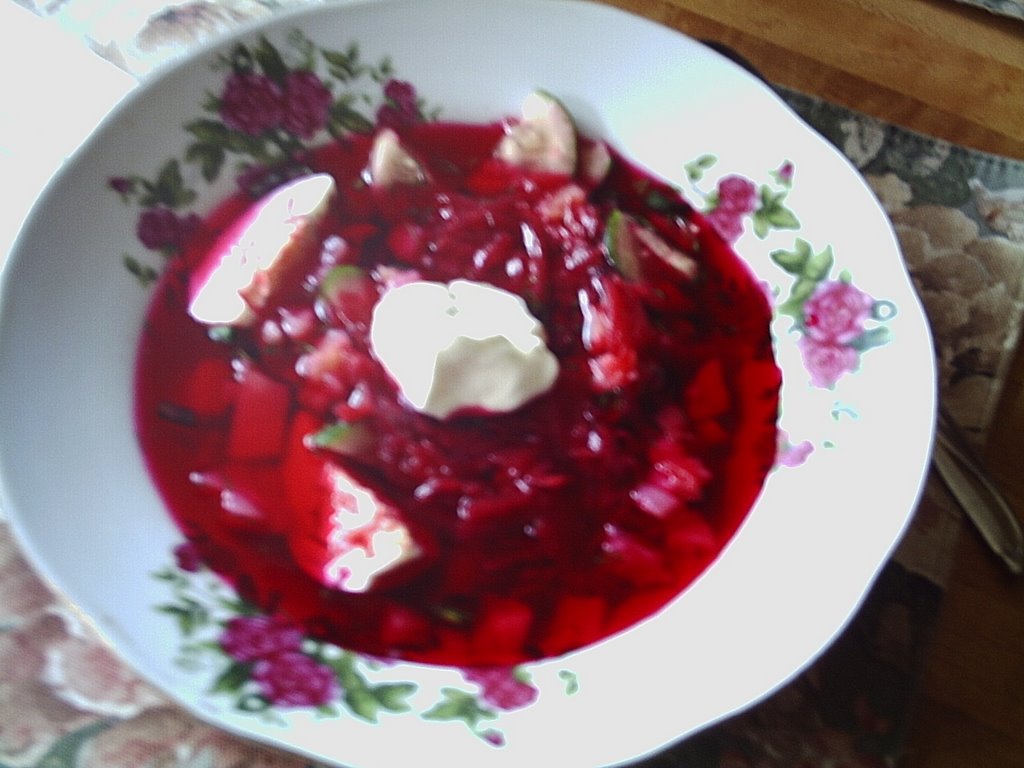
Thanksgiving in a Bowl Soup

Sorry for the long silence, guys. Oh, I’ve been cooking, but I haven’t made anything exciting in weeks. Nothing that’s inspired me to write a post that’s longer than 140 characters. (See my Twitter feed, at right, for the latest in Yulinka Cooks non-news.)

This soup is a rare exception. I thought of it while driving home from a post-Thanksgiving shopping trip, knowing I had various soup-friendly ingredients to use up. The ingredients were chicken stock, a bunch of spinach, butternut squash puree originally made for ravioli, the aforementioned ravioli, and leftover turkey.

This is how it all came together. I brought the chicken stock to simmer and added the butternut squash puree (roasted squash, a few tablespoons each of butter and whipped cream cheese, hint of sage and nutmeg--yum). In the meantime, in a skillet, I sautéed a diced onion in olive oil, and added a bunch of chopped spinach to the pan when the onion was almost cooked. The spinach was sautéed for a few minutes until it wilted. I added the vegetables to the chicken stock; then I added few handfuls of pre-frozen butternut squash ravioli to the soup pot.

I hesitate to share my ravioli recipe because a) it was something I created on a lark one Sunday night, b) I didn’t really follow a recipe and I didn’t use a pasta machine to roll out my dough, two steps usually recommended for fresh pasta-beginners, and c) I really overstuffed the ravioli and most of them didn’t seal properly. (I used this pasta dough recipe, but in the future I’ll follow this excellent, detailed guide to making fresh pasta.)

Anyway, when the ravioli were almost cooked—it only took about 2 minutes—I added some diced, roasted turkey to the soup pot. Some stirring, a bit of kosher salt, some black pepper, and the soup was done. It was creamy, slightly sweet, nourishing and filling. It was like a festive holiday meal with your family, assuming you like your family. It was Thanksgiving in a bowl, in short. I will be making this again and again.

Note: Keep in mind that you can substitute quite a lot of ingredients here—you don’t need butternut squash ravioli; just use a favorite pasta or diced, cooked potatoes (or forget the starch altogether). Instead of turkey, you could use leftover chicken, ham or diced sausage. But do make the butternut squash puree.

Wednesday, June 28, 2006

Svekolnik (Cold Borsch)

I have trouble with seasonal cooking. I like hot soups year-round. I will rarely turn down a good stew. I'm uninspired by salads until August, when I can pluck tomatoes and cucumbers right from my mom's backyard garden. I may have qualms about using the oven when it's 80+ degrees in my non-air conditioned apartment, but a nice poppy seed roll chases away my regrets.

Svekolnik, also known as cold borsch, is one of my consessions to warm weather. It's nothing like hot borsch, which is a meal in a bowl. Rather, svekolnik is a light, low-calorie soup that tastes bests when the weather is hot, hot, hot. It could almost pass for hip, vegan raw food. I'm cheating a bit here because my mom made the soup above. But I liked eating it and will make a svekolnik of my own one of these days.

I don't have the exact recipe, but the basic technique is this: In a soup pot, bring beets and water to a boil, then simmer until the beets are tender. Remove and cool the beets, then peel and grate, adding them back to the liquid.

[Update, August 08: The recipe is this: thoroughly wash and scrub a pound of beets. Cover the beets with six cups of water; bring to a boil; then simmer for 60-90 minutes until soft. Proceed as written.]

Add lemon juice, red wine vinegar, sugar, salt and pepper to the beet liquid to taste. This is the hardest part--underseason, and the soup will be bland. It should taste sweet-and-sour, erring on the side of sour. My mom's secret ingredient is a good splash of dill pickle brine. Chill the soup throughly in the fridge, preferably overnight.

Right before serving, chop up: hardboiled eggs, boiled and peeled potatoes, fresh peeled cucumbers, scallions, dill and parsley. I also like pickles in svekolnik. Divide the fix-ins between bowls, ladle the soup over the top and serve with sour cream.

Monday, November 12, 2007

Vegetable Soup with Chicken Meatballs

I realize that no one who’s serious about cooking and eating has anything good to say about boneless, skinless chicken breasts, but I have to speak up on their behalf. Yes, they are usually dry and overcooked. Yes, they are the province of unadventurous eaters and dieters. Yet I think they’ve very useful to have on hand, provided you cook them correctly. Pounded thin and quickly sautéed over high heat, they can stay juicy and make a nice addition to quick stir-fries.

That’s how I usually cook them, but a couple of weeks ago I got the idea of making chicken meatballs and poaching them in chicken stock. These meatballs are very easy to make and cook almost instantly in the simmering stock, which provides some much-needed moisture. I’d hesitate to sauté or simmer them in sauce for, say, spaghetti and meatballs, though—they’ll probably dry out quickly. Best to keep the cooking minimal.

Method:

Place 8 oz of boneless, skinless chicken breasts, cut into chunks, into a bowl of a food processor. Grind until the meat is coarsely chopped (don’t overprocess into a smooth paste). Put the meat in a bowl, and add an egg, a couple of tablespoons of bread crumbs, a couple of tablespoons of chopped parsley, a dash each of salt, black pepper and red pepper flakes; mix well with a spoon to combine. Shape the mixture into meatballs that are about 1 inch in diameter; placed on a wax paper-lined plate and chill them in the fridge for a couple of hours.

For the soup: dice a large onion and a couple of carrots. Heat up some olive oil in a soup pot; add the onions and carrots and sauté until the onions are soft and golden, 10 minutes. Add 4 cups fresh spinach (or substitute frozen in the next step) and 2 minced garlic cloves; sauté for a few minutes just until the spinach is wilted and the garlic is aromatic. Add salt and pepper to taste. Add 5 cups of good quality chicken stock, 1. 5 cups cooked cannellini beans and the frozen spinach, if that’s what you’re using. Bring to a boil and add a couple of bay leaves. This would be a good time to toss in a Parmesan cheese rind, if you have one. Turn the heat down and simmer the soup for 10 minutes. Carefully add the chicken meatballs to the soup pot one by one. Simmer until they’re just done, about 4 minutes. Serve the soup immediately, preferably with grated Parmesan.

Tuesday, February 22, 2011

Russian Cold Remedies

Been sick yet this season? In Russia, you wear down the cold! In keeping with cold and flu season, here’s a rundown of traditional Russian cold remedies. None of these will cure your cold, of course, but all will make you feel better when you’re going through boxes of Kleenex and rubbing your bleary eyes.

Tea: Tea is the Russian cure-all for everything—illness, hangovers, heartbreak, you name it. Brew yourself a pot of strong Earl Grey (see my user-friendly directions) and choose your add-in: lemon and honey, raspberry jam, or a good splash of brandy...okay, vodka.

Raspberry jam: Whether you add it to tea or eat as is, Russians say raspberry jam is good for colds. I’m neutral on this.

Oatmeal with raisins and butter.
Kasha: I don’t know if this counts as a traditional Russian remedy, but it helps me when I’m sick. Kasha* (каша), in Russian, is any hot cereal, such as oatmeal or cream of wheat. It's usually made with milk, not water, and it’s good comfort food when you’re out of sorts. Eat with a big pat of butter. You can afford the calories when your immune system is weak, you know. (*Kasha refers to buckwheat in English--in Russian, however, buckwheat is called grecha/греча.)

Hot steam: This one’s fun. Boil some potatoes in a large soup pot; drain when done. Lean over the empty pot, cover you head with a blanket—and breathe. The steam’s supposed to clear the nasal passageways. It’ll also open up your pores--kind of like a DIY spa treatment! Save the potatoes for salad Olivier, if you manage not to sneeze all over them.

Gogol-Mogol: Also on the weird side is this eggnog-like drink. I have no idea if it helps cure colds, as I’ve been fortunate enough to avoid it. Gogol-mogol involves mixing a raw egg with honey, hot milk and butter. Here’s a recipe.

Chicken noodle soup with meatballs.
Soup: Chicken soup, of course, but any kind of hot soup will do.

This is by no means a complete list. For more Russian cold remedies, including non-edible ones—ground mustard on your socks, anyone? —check out this blog.  And share your favorite cold remedies, Russian or otherwise, in the comments.
Related Posts with Thumbnails