Sunday, October 22, 2006

Mushroom Rice Soup

Proust had madeleines; I have mushrooms. When the weather is overcast, damp and warm, I often think about childhood mushroom picking trips at our dacha (summer house). Then I’m transported to some sort of a Tolstovian country idyll that is mostly a figment of my imagination.

A while back I wrote this in the comments of a post about mushrooms at The Seasonal Cook's blog:

I spent part of my childhood in Russia and my warmest, fuzziest memories are of mushroom picking in the country. I think my parents taught me to identify different types of mushrooms when I was 5 or 6. We would mushroom picking in the forest on damp, rainy days ('cuz rain makes mushrooms sprout, I was told.) I remember being so excited as a kid when I found the good eating mushrooms. I got even more excited when I spotted the poisonous moohamor--"death to flies," literally. This mushroom had a bright red cap with yellow dots.
We also picked lots of lisichki, or little foxes (chantarelles). I don’t know the English names of all the other mushrooms we found, and I’d be surprised if they even grow in North America. Here are some translations for the mycologists from this BBC article: Bely or Borovik mushroom (Penny bun boletus), Opiata (honey mushroom), Podberyozovik (Rough birch stock), Masliak (Slippery jack) and Ryzhik (Saffron milk cap).

Mushrooms soup is still my favorite way to use mushrooms. Lately I’ve been craving Russian soups, partly because fall calls for rich, earthy food, and partly because I’ve been itching to do some cooking that reflects this blog’s theme.

My ideal mushroom soup has both dried and fresh mushrooms, so I based it on a recipe from Beyond Salmon and a mushroom noodle soup from Anya von Bremzen’s Please to the Table. Admittedly, mushroom rice soup doesn't sound all that Russian, but the boyfriend claims to hate barley. Nearly all Russian soups also call for potatoes, which I've left out here. I think that starch with starch is overkill, especially if you have a desk job.

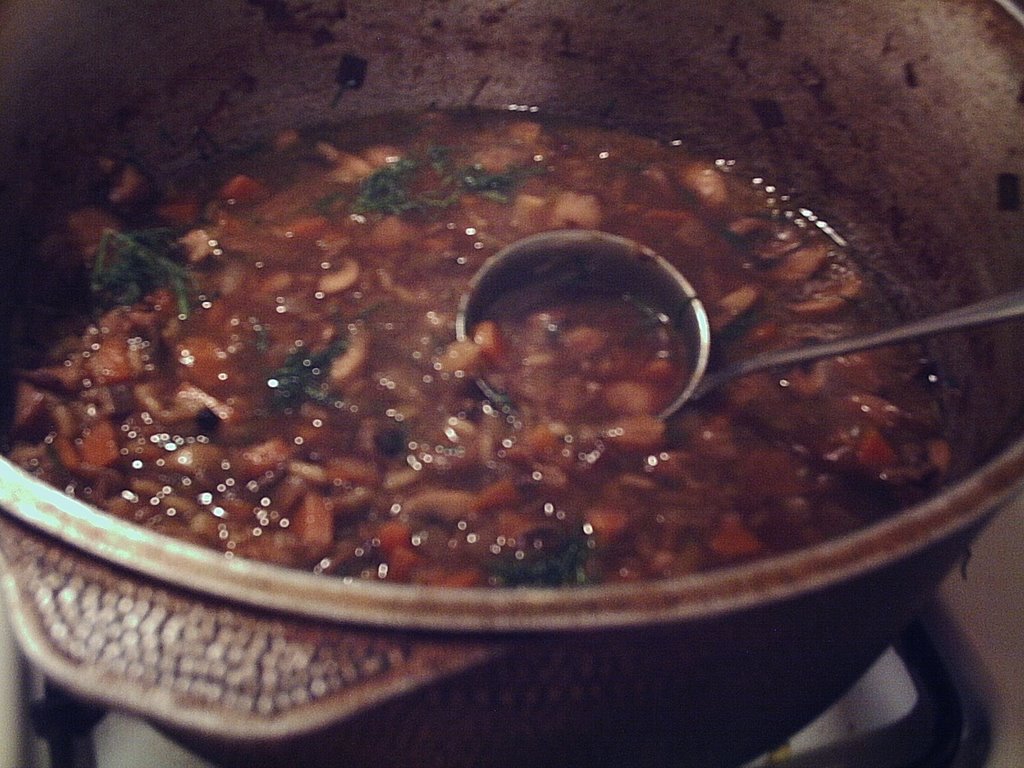
This mushroom rice soup was really pretty good, if a little too rich. I suspect that my homemade chicken stock was at fault. It’s been ingrained in me that you make soup with stock—beef, chicken, even vegetable—but never water. So I avoid water-based soups in fear that they’ll taste flat and, well, watery. Am I wrong?

For the soup, I soaked ½ ounces dried porcini mushrooms in ½ cup of water for two hours. I strained the water through a coffee filter and reserved it for later. If you’re smart, you’ll run your mushrooms through several changes of water to get rid of the grit. If you’re me, you’ll do that after you nibble on a mushroom and end up with a mouthful of dirt right before you’re supposed to toss the mushrooms into the soup pot.

I warmed up the diced aromatics—a small onion, half a leek, half a large carrot, a garlic clove—in some olive oil and butter until the onions were translucent. Then I added 2 cups of sliced, fresh mushrooms, and sautéed all the vegetables for 10 more minutes. I added the chopped, re-hydrated dried mushrooms; mushroom stock and 3 cups of chicken stock; 2 bay leaves and couple of peppercorns. All of this simmered for 20-25 minutes, after which I added 2-3 tablespoons of dry rice. The soup simmered for 15-20 minutes more, until the rice was done. I tossed in a bunch of chopped dill before serving and we ate the soup with dollops of sour cream.

Monday, October 09, 2006

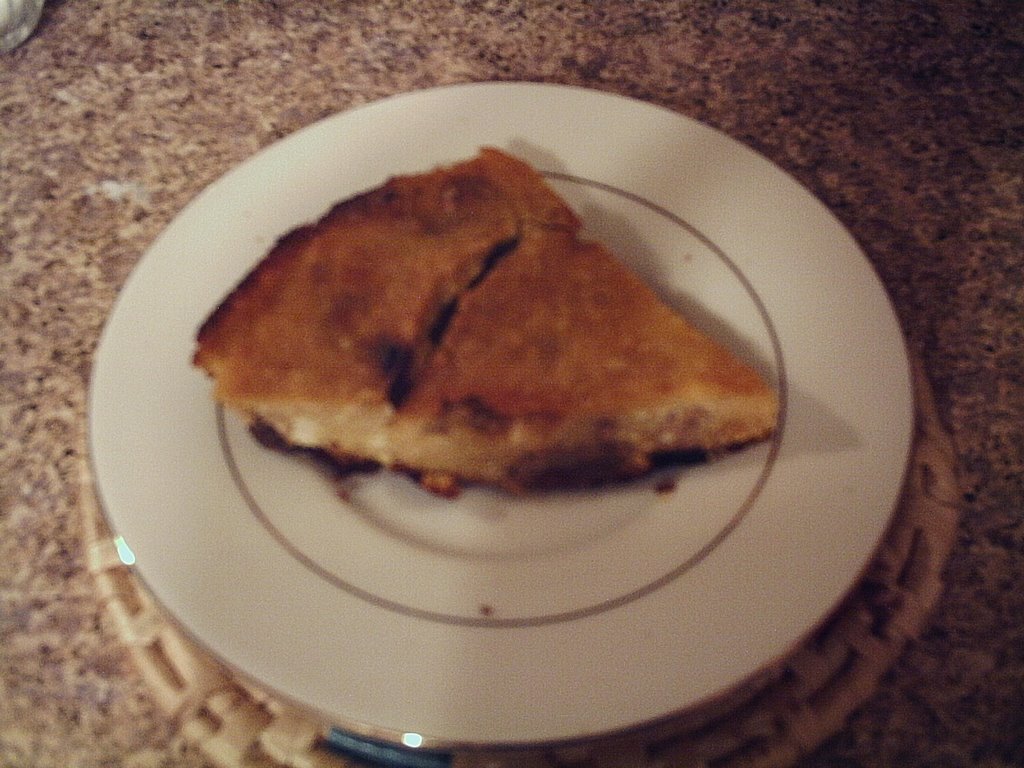
Pumpkin Zapekanka

It’s boring and banal to complain about how busy you are, but that’s my excuse for not updating. I haven’t cooked anything blog-worthy in weeks. Fortunately, it doesn’t take long to bake a zapekanka, my latest farmer's cheese creation. I’m surprised that I’ve never blogged about zapekanka; it’s one of the quickest and easiest Russian desserts. Zapekanka really refers to any kind of baked pudding. There’s carrot zapekanka, rice zapekanka, and so on, but the most common type of zapekanka is made of farmer’s cheese. Think of it as crustless cheesecake.

I Americanized this version by adding pumpkin, being fall and all. You could substitute ricotta for the farmer’s cheese and make a sort of cheesecake. A pastry or cookie crust or shell would also work nicely in this recipe should you want to Americanize it further.

The ingredients aren’t exact; I eyed everything. My zapekanka suffered a little thanks to inexact measuring—I used too many wet ingredients, so the cake was soggy. Still, I think pumpkin zapekanka is a good idea, even if I didn't carry it to fruition.

I mixed two cups of farmer’s cheese with two egg yolks. Then I added one at a time: a cup of canned pumpkin, 4-5 tablespoons sugar, 3 tablespoons sour cream, 4-5 tablespoons uncooked cream of wheat (not instant),1 tablespoon melted butter, a couple of handfuls of walnuts and raisins, and a good dash of cinnamon, nutmeg, ginger and cloves. I beat the egg whites separately before adding at the end. I baked the whole thing in a 375-degree oven for 50-60 minutes.

Wednesday, September 20, 2006

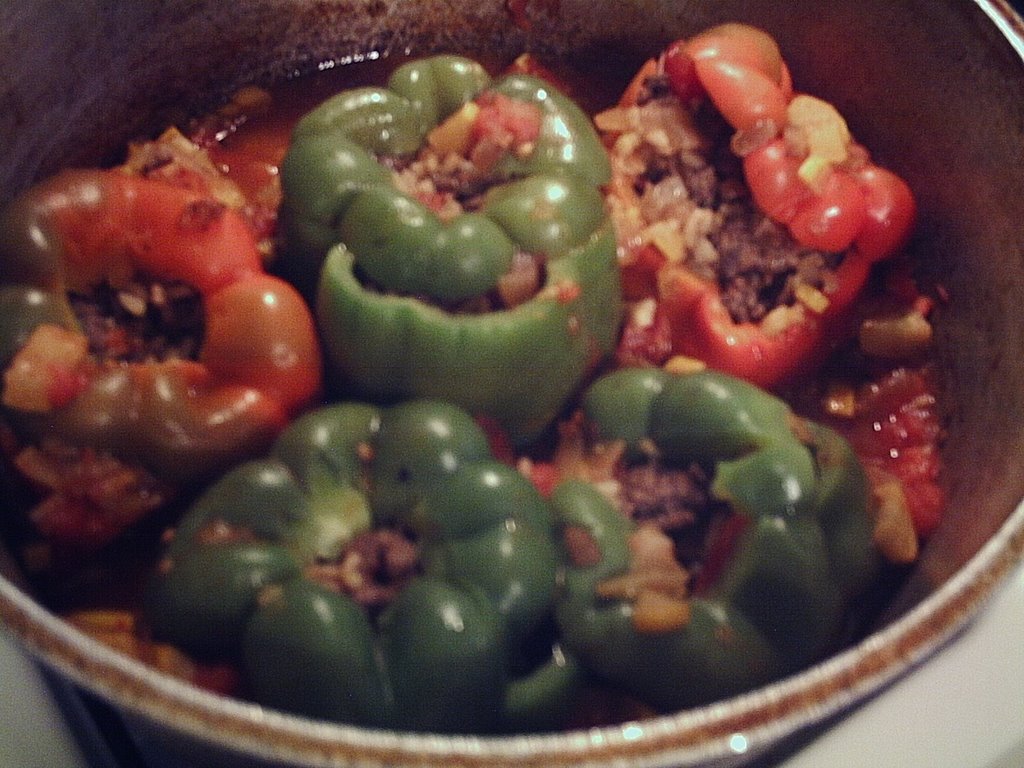
Stuffed

Some people think of stuffed peppers as heavy winter fare, but I think of them as excellent late summer food. Peppers are cheap at farmer's markets in late August and early September: I bought five for a buck last week. I stuffed them with my usual lamb and rice filling. After simmering in tomato sauce, made of excellent local tomatoes, for an hour, the peppers were ready. The peppers are the latest in my series of stuffed summer vegetables. So far I've stuffed: zucchini, round zucchini, eggplant and tomatoes.

Unfortunately, cooking and blogging will be sparser until December because I've started grad school. Working full-time and going to school part-time will take up most of your time and take away your desire to cook, as I've discovered in the last month. How can I justify messing around in the kitchen all afternoon when I have a 12-page paper to write and a mountain of reading to get through?

That said, I'm going to keep cooking and blogging when I can. And, reader, I know you are curious about what vegetables I will stuff next. Oh, yes, you are. Stay tuned...

Tuesday, September 12, 2006

On Tea

I drink tea all year long. I drink a lot of tea when it’s cold out, I drink tea in the summer, though not as much, and I drink it by the gallon when I’m sick. Tea revives me when I'm tired and comforts me when I'm sad. I bring a thermos of tea on long trips and to work.

Some tea-lovers have fussy rules for making tea. I don't. I don’t filter my water; I buy reasonably priced tea; all in all, I don’t know much about different sorts of tea and I don’t really care.

That said, there are a couple of basic guidelines to making tea. No teabags is one. See this and this on why tea bags are inferior. I’ll use tea bags if nothing else is available and I’m desperate, but I usually avoid them. I buy loose leaf tea at Indian, Chinese or Russian grocery stores. For everyday tea-drinking, I use a 50-50 blend of loose leaf black tea and green tea.

This is how I brew my tea: I bring a kettle to a boil. I swirl some boiling water around in a tea pot. Then I add the tea leaves—I use about one teaspoon per two cups of water. I pour the water over the tea leaves and leave them to steep for 5-6 minutes. I usually drink tea straight up, but sometimes I'll add a slice of lemon or a little honey (never sugar). Very rarely, I’ll have tea with milk. Jam that's not very thick makes a good sweetener, too. (Sometimes I like to defrost a bag of frozen raspberries, mix in 1/2 cup to 1 cup sugar, and add the berry liquid to tea. The rest of the berries I eat with yogurt.)

I’ve never had good tea in a restaurant or a coffeehouse, so I don’t order it anymore. Run-of- the-mill restaurants give you a lukewarm cup of water with a tea bag; “nice” restaurants give you a pot of hot water and a selection of tea bags; coffeehouses, from Starbucks to the locally-owned neighborhood place, give you a paper cup of hot water and a choice of herbal tea bags. Why bother?
I drink water with meals, but for dessert I need tea, or coffee, at least, if I can’t get decent tea. That's one of the few things I’m picky about. There’s just more pleasure in eating something sweet when you're cutting it with a hot beverage that verges on bitter. (The French practice of drinking coffee after dessert is mystifying to me. As for soda with dessert--no.) Besides dessert, other foods that demand a good cup of tea are toast/bread/bagels slathered with anything sweet or salty, any kind of pancake, sandwiches and breakfast eggs.

Wednesday, September 06, 2006

The Four Seasons

I’m seeing a flurry of butternut squash recipes around the blogosphere, and so, fall begins. No complaints from me; in fact, late summer and early fall are my favorite food seasons. I began going to farmer’s markets weekly in early July but I didn’t really get excited about seasonal eating until August. For the past month I’ve been lugging home bags of eggplant, corn, zucchini, green and red peppers and tomatoes. I used to make ratatouille every weekend and when I got tired of it I made eggplant parmesan, corn chowder, zucchini and yellow squash gratin and stuffed vegetables--eggplant, zucchini, tomatoes, etc.

Soon I’ll be moving on to apples, hard squash, fall spices (nutmeg, cloves), hot soups, turkey, sweet potatoes, stews, and pumpkin everything. This fabulous time of the year stretches from early August until just past Thanksgiving and tapers off completely after New Year’s. Come January I’ll be buying indifferent vegetables from the supermarket and by February I’ll be craving late-August tomatoes and farmer’s market cucumbers while peeling rutabagas.

Spring is my least favorite season when it comes to both food and weather.* March and April are disappointing months in Wisconsin. They hold the promise of warmth, lighter, fresher food, and the first days of sandal weather. They deliver a snow storm or two, temperatures no higher than the middling 50s and, at best, supermarket asparagus. What’s in season in Wisconsin in the spring? Not much, unless you get excited by rhubarb in May, and I don’t. Do people on the East Coast and in the Midwest really cook the light, spring-like dishes that food magazines feature on the covers of their March issues?

I don’t have strong opinions about June. Strawberries are in season, which is nice but would be nicer if they weren’t so expensive. I tried to be a good, seasonal foodie this year and eat salads and lighter, brighter food but I still craved hot soups in early June. June weather is a little tenuous; there’s a slight chill in the air in the morning and at night. December is another mixed bag. On one hand, you can bake and eat your fill of rich goodies with impunity, being the holiday season and all. On the other hand, all that baking and short, cold days eventually make everyone feel fat and sink deeper into the couch.

Now, in early September, there’s just a slight chill in the mornings but it’s welcoming to me as it hints at upcoming events that may be marked by food. My birthday (Sept. 29), my family’s anniversary of coming to America (Oct. 24; last year we were all multi-culti and went out to an Indian restaurant), Halloween (leftover candy, especially Twix and Mars bars), Thanksgiving (my favorite holiday), Christmas and New Year (a big deal for us Russkies; can’t wait for my once-a-year taste of caviar).

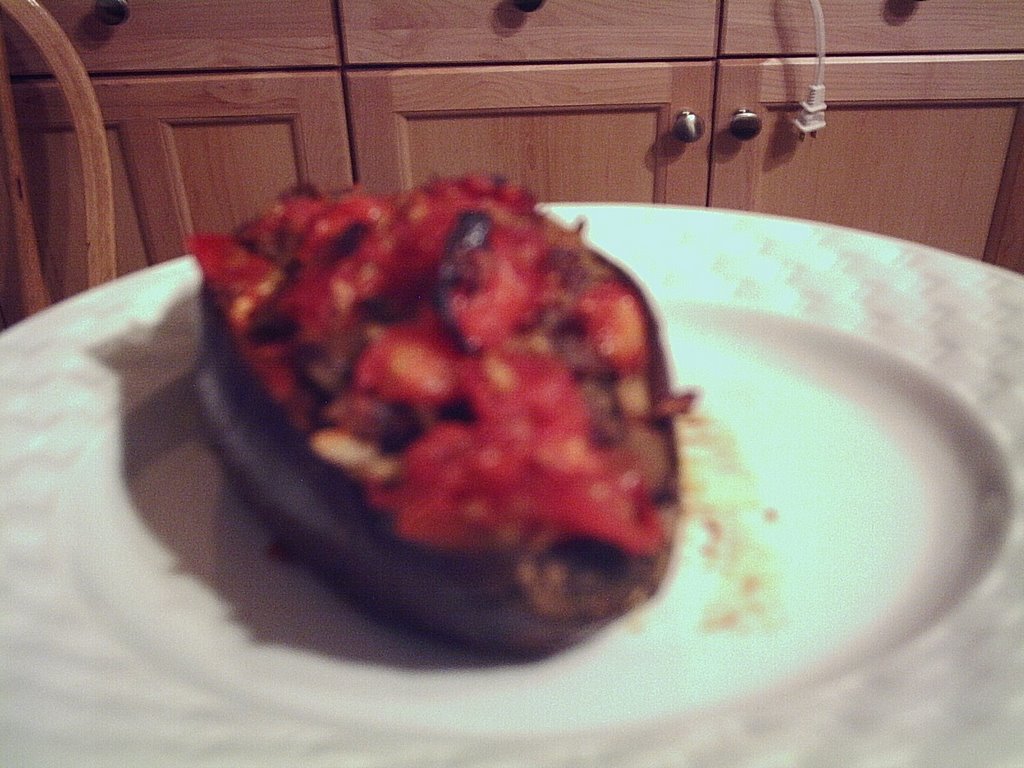
For those dreading the inevitable chill of fall, here’s a late-summer stuffed eggplant recipe. There’s still time to make this.

I sliced three small eggplants across lengthwise and scooped out the flesh with a sharp spoon. The eggplant shells I broiled for about 20-25 minutes. In the meantime, I made my usual lamb and rice stuffing, loosely based on a recipe in Anya von Bremzen’s Please to the Table. I sautéed half an onion, added ground lamb—a little less than ½ pound—and spiced with cinnamon, allspice, cayenne and salt. This I sautéed until the lamb was done.

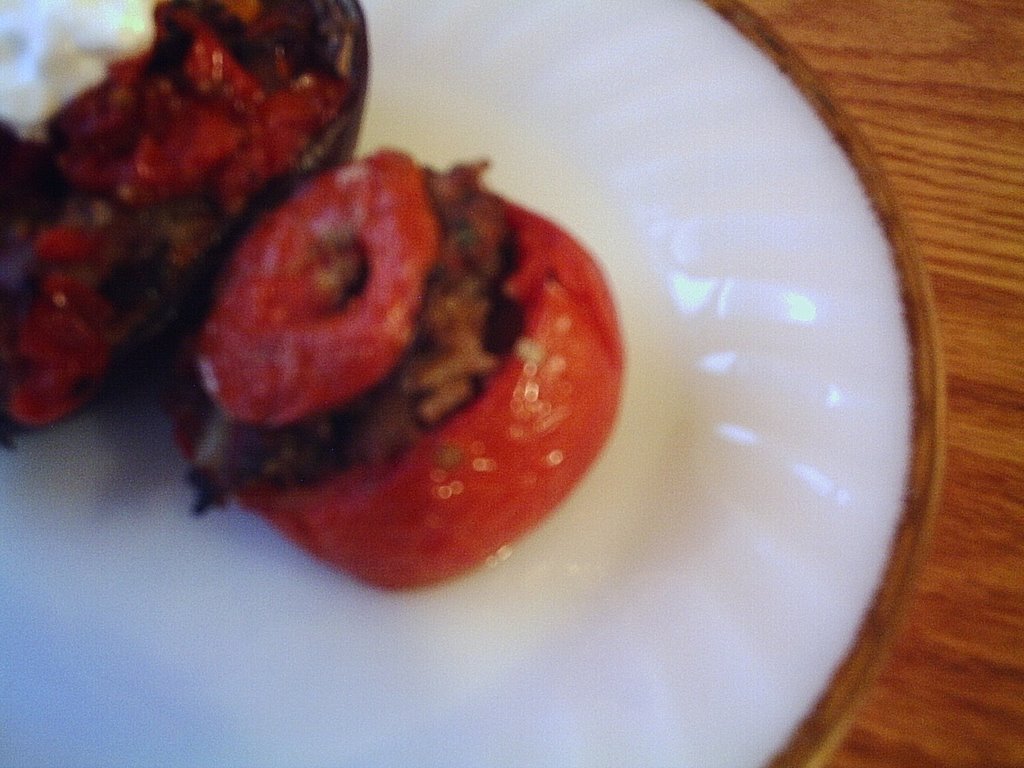
Then I added a couple of peeled, chopped tomatoes and simmered the mixture for a little while. In the meantime I sautéed the eggplant pulp separately, and, when it was soft, folded it into the lamb, along with some cooked rice. After stuffing the eggplants I ended up with some leftovers so I stuffed a few tomatoes as well. The vegetable went into a casserole pan into which I poured a little tomato sauce (a very basic marinara that I made to de-glut my kitchen counters of tomatoes). I baked all this at 425 for about 20-25 minutes and let the vegetables stand for 15 minutes before eating. They’re best lukewarm or at room temperature.

* Based on my experience, of course. I was born and raised in the cold climates. The warmest place I’ve ever lived in was Columbus, Ohio.

Wednesday, August 30, 2006

Devon Avenue, Chicago

Last weekend the boyfriend and I went to Chicago, ostensibly to hang around downtown and Navy Pier. What I really wanted to do was to check out the ethnic grocery stores on Devon Avenue. I got a quick glimpse of Devon a couple of years ago when I was in Chicago with my parents and they had taken a wrong turn while looking for the freeway entrance. The street was teeming with ethnic groceries--Russian, Indian, Turkish--and I've been intrigued ever since.

When you first turn onto Devon, Russian-Jewish businesses abound. I spotted a Jewish community center, an Israeli restaurant and Russian grocery stores, bookstores and video stores. Several blocks later, stores with names like Tbilisi and Balalaika give way to blocks and blocks of Indian and Pakistani businesses, with the occasional Chinese restaurant thrown in.

I did a quick Google search the night before our trip and unearthed Argo, a Georgian cafe/bakery/grocery where we stopped for lunch. A small fence separates the tiny two-table cafe from the actual bakery, where two employees were busy rolling out dough when we came in. I asked the friendly owner if they had hachepuri, Georgian cheese bread, and, of course, they did. We were served hot, flaky puff pastry stuffed with feta cheese on paper plates. Then we sampled meat, potato and sauerkraut pirozhki, all made with the same flaky dough. The potato pastry was the best of those three, but hachepuri was my favorite.

We took home a pound of pelmeni--Argo sells all sorts of frozen doughy goodies--two more hachepuris and five loaves of bread, still warm from the oven. One of the breads was a long, baguette-like loaf and the other four were lavash. Lavash, a round, puffy bread that looks like a baked pizza shell, was fantastic. I wish I had taken a picture of it but we ate one loaf in the car on the way home, another loaf after we got home, and the rest we gave to our respective parents.

Argo also sells Georgian and Russian specialties like sour plum sauce, adjika (a spicy relish), suluguni cheese (used as filling in hachepuri), kefir, sour cream, caviar, etc. (See this for another review of Argo, plus pictures. I think the owner is in the first photo.)

After lunch we walked down Devon, past the Indian restaurants and the women in saris, past the mosques and Pakistani groceries smelling of exotic spices and the video stores displaying posters of Bollywood hotties. We were too full to eat anything else. I'd love to come back and explore this part of the street, and I'm especially intrigued by the very reasonably priced lamb and mangos in the ethnic groceries.

* Argo Georgian Bakery
2812 W. Devon Ave.
Chicago, IL 60659-1502
(773) 764-6322

Sunday, August 27, 2006

Meme: Five Things to Eat Before You Die

I'm terribly excited to finally get tagged with a meme. (Thanks, Rebecca!) I love memes and always read them when I'm skimming through a blog that's new to me. I can do without memes that ask for five things you keep in your purse, or whatever, but food-related memes give a glimpse of the blogger's personal history, and that's always a plus.

Rebecca, of Eat, originally originally wrote about five things she's never had and wants to try. I would have liked that kind of meme more. I'm new to cooking and foodie-dom, so there's quite a lot I'd like to try. I just haven't been around long enough to have an intimidatingly exotic list of foods.

But, for now, here's my list of five:

1. Blini, my sentimental favorite. Half a dozen of warm blini with butter, jam, honey and sour cream, washed down with a big pot of tea, is one of the most delicious meals you can ever eat.

2. Manti, steamed Uzbek lamb dumplings. These are oversize pockets of dough with a filling of lamb, onions, coriander, cumin, and, sometimes, pumpkin, stuffed in the middle. They're always steamed in a special dumpling steamer. My boyfriend's mom makes pretty great manti, and she once taught me to make them from start to finish. We used ground lamb, but to make the authentic version you have to chop boneless lamb by hand. Hot, juicy manti must be eaten with your hands, I'm told, never with a knife and fork. Too bad I wasn't blogging when I got my manti lesson, but I'll make them myself one of these days.

3. Fresh fruit in season. I eat lots of fruit but so much of it is disappointing. Really good fresh fruit is one of the great pleasures in life. This is my fruit and berry hierarchy: A-list fruit-- peaches, mangos, nectarines, apples, strawberries, blueberries, raspberries. B-list--melons, pears, grapes, oranges, grapefruit. C-list--Plums, watermelon.

4. My mom's Napoleon cake. Once year, usually around Christmas or New Year's, my mom bakes a Napoleon. You can buy mille feuille pastry ready-made, of course, but my mom makes her own. It's tricky and time-consuming, but worth it, we all agree, when we bite into layers flaky pastry and cream made of butter and sweet condensed milk.

5. Chocolate frozen custard from Kopp's. The creamiest, smoothest, richest ice cream I've ever had.

I'm tagging Jeff of Eat Wisconsin, Helen of Beyond Salmon, Betty of Cuisine Quotidienne, Lindy of Toast and Katherine of ToastPoint.

Wednesday, August 23, 2006

Making Pickles

What you see above is pickle-making in progress. I'm using a family recipe that my mom dug out of my grandmother's hand-written recipe notebook. I'm not canning, mind you, just making pickles that'll keep in the fridge for about a month.

Here's how: I scrubbled clean about 25 farmer's market cucumbers and cut off the ends. Then I pricked them all over with a fork and put them in a bowl with layers of dill seed heads, black currant leaves (optional) and half a dozen garlic cloves. (If I had horseradish root, I'd use it.)

I brought a liter of water to a boil, added a tablespoon of sugar and two tablespoons of kosher salt, and poured the hot water over the pickles. Then I added about two tablespoons of vinegar to the bowl. I put a plate with a weight (a bottle of vegetable oil) over the bowl. The brine is working its magic as I write this, but we'll see how the pickles turn out in two days.

Update: The pickles are pretty good: nice and crunchy, if a bit too salty. They need another day in the fridge after their two-day brine bath for the best taste.

Wednesday, August 16, 2006

Kvass Update

Well, my kvass was interesting. Drinkable? Not really. But interesting. Let's write kvass-making off as a learning experience.

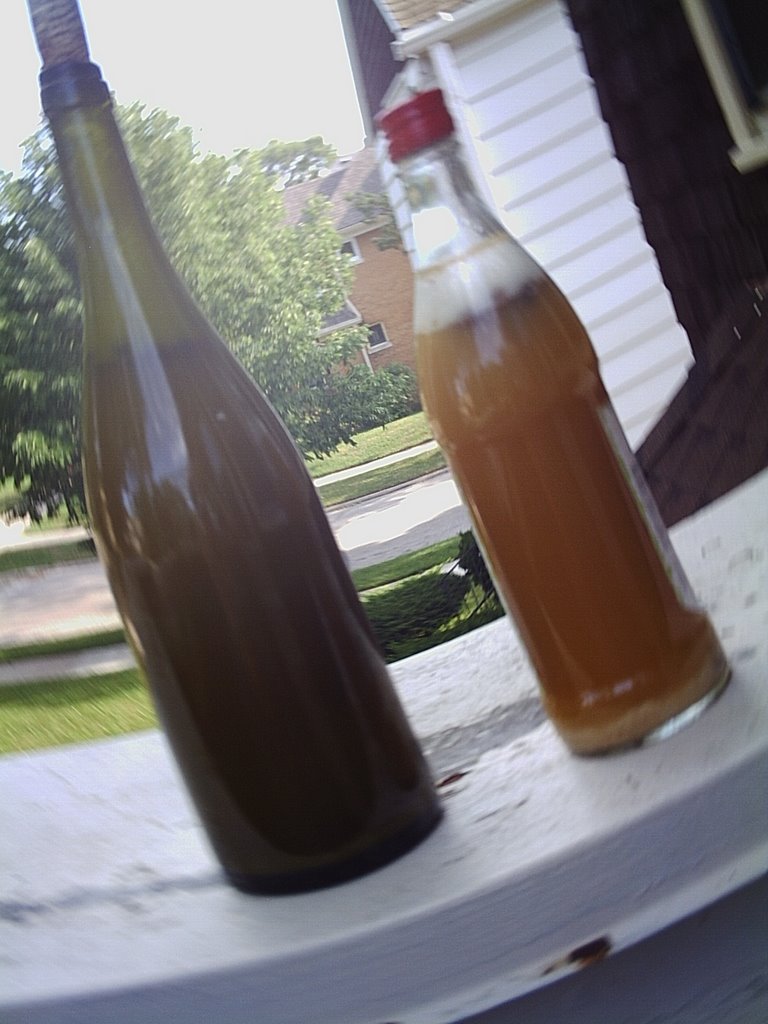
I filled two bottles with kvass last Monday morning and left them on a kitchen counter to start fermenting. When I got home I found one of the corks lying in a puddle of kvass next to the bottle. I stuffed the cork back in and let the kvass ferment for a few more days, but not surprisingly the kvass in that bottle was completely flat and tasted terrible. The second bottle, which remained corked the whole time, was closer to the real thing. The kvass was carbonated, smelled right but tasted oddly sour.

I'm not up on my food chemistry, so I'm not sure what happened. Did the recipe call for too little sugar? Was the bread at fault? Someone notes in the comments that you can't make kvass out of borodinsky rye bread, which is what I used.

For the sake of comparison, I made another batch out of kvass starter (photo above), one of the weirder things you can buy at the Russian store. Kvass starter is a thick, molasses-like liquid to which you add sugar, yeast and water. This fake kvass is sugary sweet, but more palatable than the sour batch.

My enthusiasm for making kvass has dimmed a little, although I may try again, using better bread.

Sunday, August 13, 2006

On Farmer's Markets and Corn Chowder

I take back everything I said about how expensive eating local is. For the past month and a half I've been buying almost all my produce at one of the local farmer's markets and most of the the vegetables there are cheap. You can get eight zucchinis for a dollar. A whole basket of excellent, firm cucumbers for two bucks. Three pounds of excellent tomatoes for $5.

But does locally grown food taste better than supermarket produce? Some snap judgments of veggies I buy almost every week:

Tomatoes: Incomparably better than store tomatoes, of course. Still, I've had more than a couple of starchy farmer's market tomatoes.
Corn: So sweet that I wouldn't mind having it for dessert, with butter.
Zucchini and yellow squash: Unlike pallid supermarket squash, farmer's market squash is a deep, golden yellow. I also like round squash, which I've never even seen at the supermarket. I can't tell much of a difference in taste between farmer's market squash and store squash, though. Maybe I should taste test raw zucchini.
Potatoes: I've only tried the fingerling potatoes so far, but they just might be the best potatoes I've ever had. I can eat them like candy with a little salt and sour cream.
Cucumbers: I love tiny, super-firm, super-crunchy farmer's market cukes. I often eat them as a pre-dinner snack while cooking.
Carrots: Pretty good, but not as flavorful as I would like them to be. I've had sweeter bagged baby carrots.
Radishes: Farmer's market radishes used to be almost too spicy for me. Then I had a couple of store radishes, and they tasted so bland and blah in comparison.
Green beans, broccoli and eggplant: Damned if I can tell the difference between farmer's market versions and the stuff I buy at the grocery store in January.

There's something very pleasurable and even sensual about shopping at the farmer's market. Ripe tomatoes glisten in the sun like odalisques in an Ingres painting. You can smell fresh dill, basil and cilantro from afar. If you go to a big and crowded farmer's market, like I do, you will feel a kind of happy mood, an overall sense of well-being in the air.

That said, I'm not a total convert to the Eat Local movement. There's something a little facetious about giving up spices, coffee, tea and non-local fruits and vegetables. Foodies in the '60s and '70s fought and died so we could have Middle Eastern couscous, olive oil from Italy, and cheese from France. Why you'd want to give that stuff up as a matter of principle, I have no idea. So I will shop at the farmer's market while I can, just because most of their produce tastes better and is cheaper. Come November, I'll be back at the soulless big mart, stocking up on vegetables from God knows where.

Corn Chowder--I bought far too much corn on the cob last week so I made corn and roasted poblano chowder. This recipe is adapted from the Williams Sonoma Everyday Roasting cookbook.

You toast a tablespoon of cumin seeds in a frying pan until they become aromatic. Add the cumin seeds, along with a couple of chipotle chilies (I used jalapeno), a bay leaf and 1/4 teaspoon of rosemary (I used thyme) to four cups of milk. Bring the milk to a simmer, but don't boil. Take off the heat, cover, and let stand for 20 minutes.

Meanwhile, broil a couple of poblano chilies (the recipe called for 3; I only had 1 on hand) until their skin is black. Let cool; then peel and remove stems, seeds, etc. Dice and set aside. In a heavy stockpot, sauté a chopped onion in olive oil and butter. Salt to taste. Add a crushed garlic clove, a teaspoon of ground cumin, and cook for 5 minutes. Then add kernels from 4 ears of farmer's market corn and the poblano chilies. Cook for 5 more minutes. At this point I added a couple of cooked, diced potatoes. The recipe didn't call for them, but they weren't amiss.

Strain the milk through a sieve into the corn and onion mixture. Simmer for 15 minutes. Puree 1/3 of the soup in a blender or food processor, and add it back to the stockpot. The suggested garnish is chopped scallions, but I used a little chopped parsley and crumpled feta.

Monday, August 07, 2006

Kvass--Rye Bread Beer


As I write this, a batch of kvass is fermenting in my basement. Kvass is a mildly alcoholic Russian bread beer, usually made out of stale rye bread and yeast, and flavored with fruit juices or mint. You drink it cold as a summer beverage or use it as a base for okroshka, a chilled summer soup.

You can buy kvass or kvass starter at some Russian stores, but I wanted to make my own. There's no reason or rhyme for this. I don't have any nostalgic childhood memories of kvass. In fact, I remember tasting kvass only once. The most memorable part of this experience was buying it from a street vendor who was manning a beer barrel-like contraption (see the Wikipedia photo). I don't know what kvass tastes like, but I have a pretty good idea of what I want it to taste like. It should be yeasty, carbonated and sweet and sour, with a hint of lemon and mint.

While making kvass at home is not unheard of, it's not something people in Russia do everyday. When I told my parents that I'm making kvass, they smiled indulgently and wished me luck. Making kvass isn't hard but it does stretch over a couple of days and involved soaking dried rye bread in hot water and a lot of straining liquids through a sieve. I used two recipes, one here, and the other from a hilarious, out-of-print cookbook called Perestroika: The Dinner Party. (The theme of this book is a multi-course, perestroika celebration dinner, complete with a kulebyaka--cabbage pie--in the shape of a hammer and sickle and tablecloths made of Pravda newspaper.)

I'm holding off on praising homemade kvass for now. It takes a couple of days to ferment in a cool place, so I haven't tasted it yet. I don't know if the final result will be blog-worthy--I suspect my kvass will taste a bit flat. However, I can tell you that my kvass smells exactly how I think it should taste, and that my kitchen now has a not at all unpleasant aroma of a beer brewery.

I wish I could quote you Pushkin or some such on the greatness of kvass, but for now I can only offer these tidbits, mined from the Web:

*"Kvass is considered a tonic for digestion, an excellent thirst quencher and, consumed after vodka, an antidote to a hangover."

*Coke is ruining local kvass production by dominating the market with quasi-kvass. Kvass is hardly a "Soviet-era" beverage, by the way; Kvass production goes back centuries.

*Kvass has an alcohol content of anywhere from .7 to 4 percent.

*The recipe I'm using has the potential to taste terrible.

*You can make kvass out of apples, huckleberries or beets.

*Okroshka is low-carb. I can't wait to make orkoshka if my kvass turns out. This soup is basically a Russian version of gazpacho--you chop up cucumbers, scallions, ham, potatoes, eggs, radishes and dill, add kvass as stock, chill and eat with sour cream or spicy mustard.

*Americans are not so keen on kvass.

Saturday, August 05, 2006

Weekend Cooking Notes

*I survived the heat wave by eating salads and steamed corn-on-the-cob. Now that the weather has mercifully cooled down, I'm back in the kitchen. Today I made an unexpectedly wonderful dinner. Nothing new, nothing unusual, just pretty great late summer food.

Once again I made hachepouri, Georgian cheese bread. Last time I ended up with one big cheese pie. This time I halved this recipe and made six small pies. Three of them looked a lot like calzones--oval and puffy. The other three turned out like stuffed pita bread, and were much better. I think the trick to this recipe is flattening out the cheese-filled dough pocket until it's at least 1/2-inch thick. I bet hachepouri would be wonderful filled with caramelized onions and tomatoes along with the cheese, but then you'd have calzones. We ate warm hachepouri with Julia Child's ratatouille.

*Inspired by a Moroccan veggie stew with couscous at Casablanca, a local Middle-Eastern restaurant, I made a pretty good chicken version last week. I don't think I got the spices quite right, but I was pretty close. I sliced a boneless, skinless chicken breast into strips and sautéed it until it was almost done. Then I removed it from the skillet and added a bunch of carrots, zucchini and yellow squash, cut into ¼-inch ovals. Cooked them until they started getting soft and golden, then added garlic and spices--cumin, coriander, cinnamon (key spice), a teaspoon of sugar and a little cayenne.

Fresh tomatoes would work very well in this, but I was saving mine for salad. So I added about 1/2-3/4 a can of whole, peeled Muir Glen tomatoes and a splash of water. Brought the whole thing to a boil, simmered until the veggies were soft, then added the chicken and a couple of tablespoons of plain, full-fat yogurt, and simmered a little more. Casablanca doesn't use yogurt, but I think it really made this dish. The chicken breast did manage to dry out even though I didn't cook it very long, but I used it because I wanted to make a 30-minute weekday dinner. Next time I'd use a whole chicken, cut into parts. Chickpeas and eggplant would be very nice this kind of stew, too. Eat with couscous or rice.

Sunday, July 30, 2006

Pelmeni in Madison

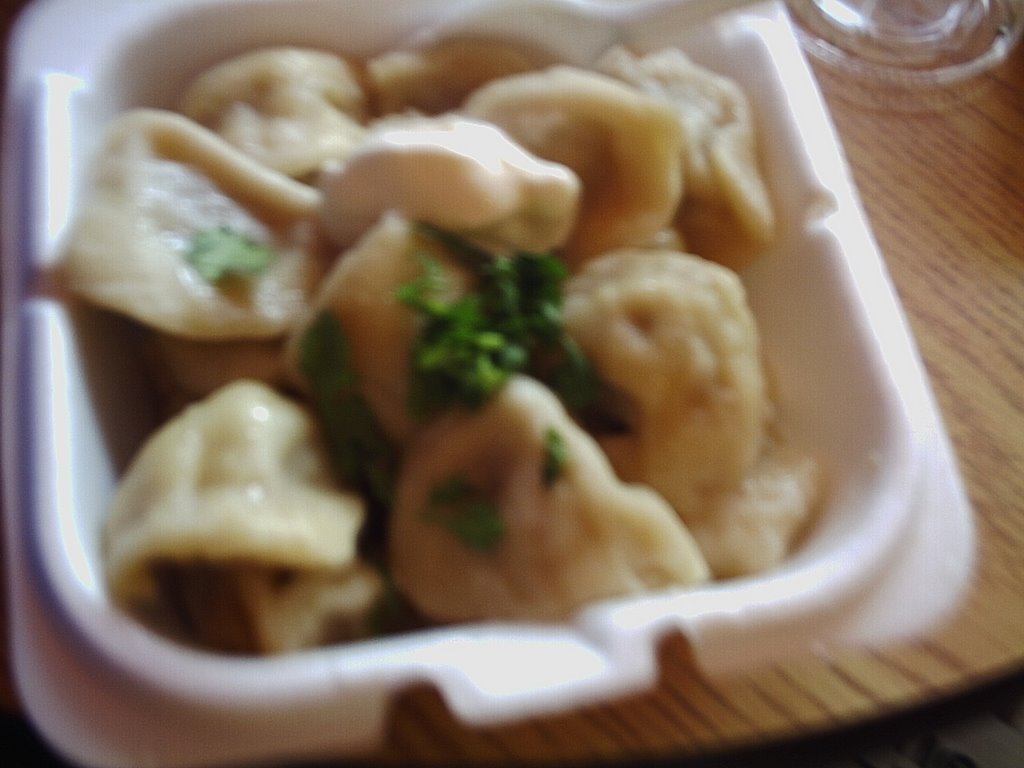
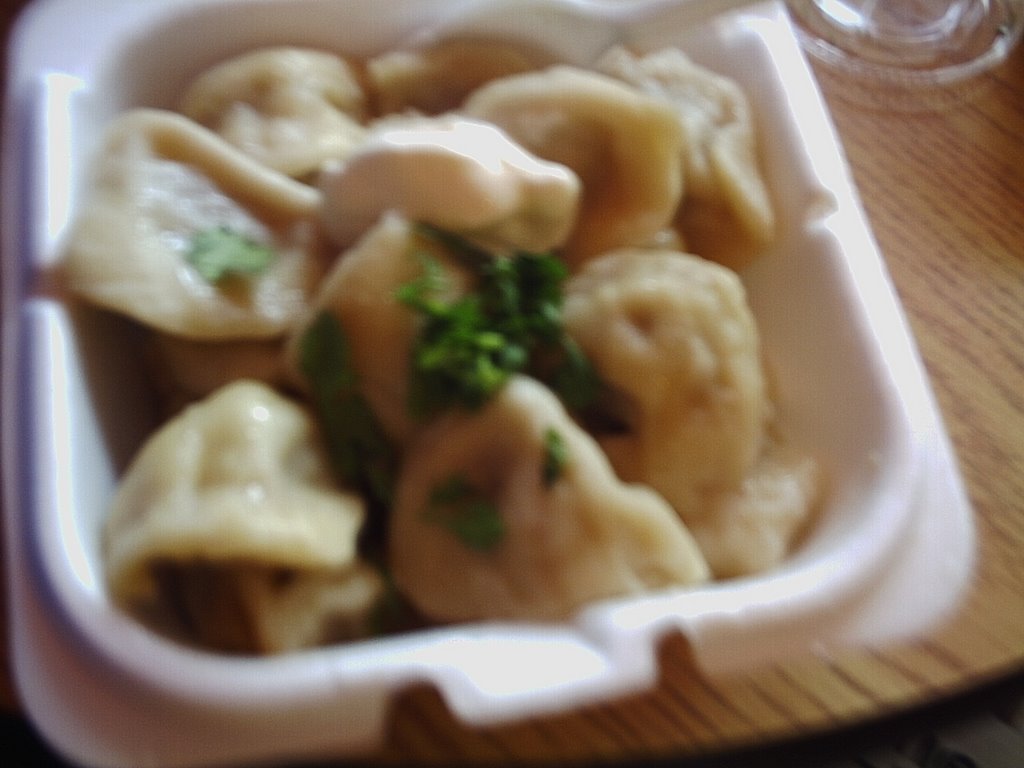
It's 90+ degrees in Madison on Sunday afternoon, and where do the boyfriend and I stop for lunch? At Pel'meni*. This tiny whole-in-the-wall on State St. sells nothing but pelmeni--Russian--Siberian, really--dumplings. I love the spartan look of this little eatery: four tables, four steaming pots and a blackboard menu. On the menu are meat and potato pelmeni. Five dollars gets you a styrofoam box full of dumplings, a piece of (forgettable) rye bread, and condiments like sour cream, chopped cilantro, curry powder and a spicy chili sauce.

The pelmeni are good, although not all that much better than the frozen dumplings I buy at the Russian store. An order feeds one moderately hungry person--we ended up having a pelmeni feast with four orders. As we ate we daydreamed about opening a dumpling eatery of our own. Our working name is "Dumpling House," and we'd sell pelmeni, vareniki (big dumplings filled with farmer's cheese, cherries, sourkraut or potatoes) and manti (Uzbek steamed lamb dumplings). I'd totally steal the blackboard menu, too.

After pelmeni I accidentally on purpose steered us toward the University of Wisconsin Union Terrace* where we tried some Babcock chocolate ice cream--made on campus at the Babcock dairy plant. It was perfectly acceptable but doesn't hold a candle to, say, frozen custard from Kopp's. Still, the Union Terrace is a pretty great place to mull over ice cream at this time of the year. Plenty of tables in the shade, a nice lake view and fresh-faced high school grads on tour, sober for now...

*Pelmeni
505 State St.
Madison, Wis.
(608) 250-1976
Open on Sundays, despite what the online listings say.

*Union Terrace
800 Langdon St.
Madison, Wis.

Tuesday, July 25, 2006

Variations on a Theme

*Remember tvorog and blueberry pie, also known as pie-oh-my for its jaw-droppingly rustic appearance? I baked another pie a few days ago, taking my own advice from last time.

Although this version was far more attractive, I think the recipe is inherently flawed. Isn't it disappointing when you want to love a recipe but the result isn't really worth it? Last time I thought the deep pie dish was at fault for the dough not baking through all the way. This time I used a shallower dish but still ended up with a thin strip of raw dough right under the cheese filling.

I sadly have to conclude that the wonderful cheese/blueberry filling is too thick and wet for this type of dough. There has to be a better use for it, though. A pre-baked tart shell, maybe? We’ll see.

*Besides Central Asian food, my other cooking interest in Middle Eastern food. There's some overlap between the two. Claudia Roden's The New Book of Middle Eastern Food has a few Armenian, Georgian and Uzbek recipes, and Anya von Bremzen's Please to the Table features a lot of food that could pass for Middle Eastern. In fact, the first recipe in the book is for tahini and hazelnut dip, which, we are told, comes from Azerbaijan. The next recipe is for cucumber and yogurt dip, by way of Armenia.

Stuffed vegetables are well known to both cuisines, so today I made stuffed zucchini. The filling I wrote about here. Both Roden's and von Bremzen's cookbooks have similar recipes for lamb and rice filling with spices. Instead of broiling the hollowed zucchini shells, this time I sautéed them in olive oil for 10 minutes. Stuffed, baked and ate with my fingers. Yogurt would have been an authentic condiment, but I was out. Sour cream made a pretty good replacement.

*The New York Times' the Frugal Traveler explores Georgia and Kyrgyzstan. The food is good, the prices are cheap, tourists are scarce and the locals are friendly. I want to sleep in a yurt and eat goat stew with plums and tarragon, too. Take me with you, Frugal Traveler!

Saturday, July 22, 2006

Not Quite Russian Food & Georgian Cheese Pie

I get really excited about cooking Central Asian (Uzbekistan, Azerbaijan) and Caucasian (Georgia, Armenia) food. Traditional Russian food is a tough sell. It's considered heavy and starchy. Every other recipe calls for beets or potatoes. It's not spicy or colorful enough for Westerners.

But, oh, the food of those impossible-to-pronounce-and-find-on-a-map Soviet republics:

The New York Times on Central Asian food:

"Reflecting the influence of silk and spice trades, there are tastes of China and India everywhere...Dishes that define [Central Asia] include lamb kebabs; shurpa, which might be a hearty vegetable-beef soup spiked with cumin or a thin lamb broth; and rice pilaf, whether chunky plov or one of the luxurious pilafs that adorn traditional Afghan banquets."

The Traveler's Lunchbox on Georgian food:

"The thing that appealed to me instantly about Georgian cuisine is both its familiarity and its exoticness. The foundations of the cuisine are all well known to the European palate: hazelnuts, walnuts, cheese, yogurt, plums, corn, peaches, apples, cherries, cilantro, basil, tarragon, dill, mint, cinnamon. What is not familiar are the preparations: beets with sour cherry sauce; beans with pomegranate and fenugreek; eggplant with walnuts and saffron; chicken with cilantro, dill and plums; rice with raisins and honey. It's as if the familiar flavors of Europe had been handed to someone who was instructed to forget everything he knew about the continent's gastronomic heritage and instead reinvent the wheel, which somehow he managed to do with subtlety, sophistication and finesse."

I know very little about the food of Central Asian and the Caucaus. My childhood palate was formed by borsh, blinchiki and potatoes in St. Petersburg. I do remember getting a whiff of grilled lamb from the shashlik stands during the summer, but shashlik was considered ridiculously expensive so I never actually tasted it.

I plan to cook a lot more of this exotic Stan-land food in the coming months. Today, I tackled hachepuri, Georgian cheese pies. Anya von Bremzen calls hachepuri the Georgian equivalent of pizza. I followed a recipe from the Traveler's Lunchbox almost to the letter. But instead of making six little pies, I halved the recipe and made one big pie. It was very good, if not exactly Georgian. In fact, it looked a lot like an American-style pie with cheese instead of fruit filling. That hardly stopped me from cutting it while it was still hot and eating the warm, gooey cheese filling with a spoon.

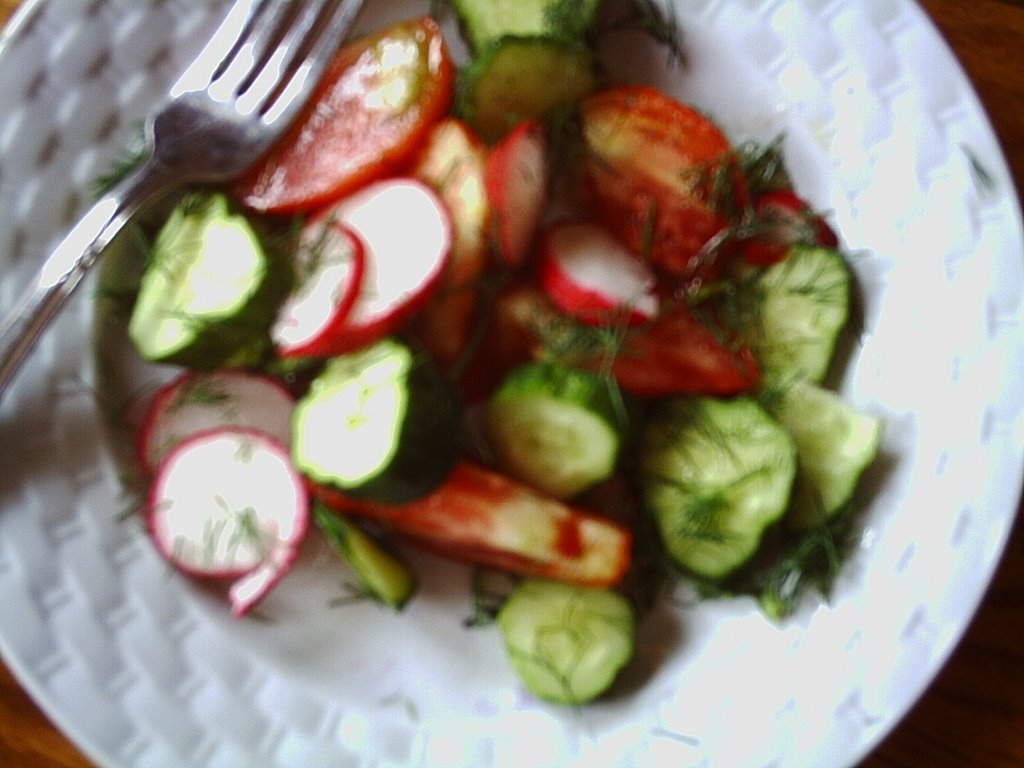
With the cheese pie I ate my favorite summer salad. I'm indifferent to lettuce salads but I can't eat enough of cucumber and tomato salad with dill. I sliced a couple of small cucumbers, tomatoes and radishes and tossed them with some fresh dill. The dressing was a glug of olive oil, a drop or two of red wine vinegar and a healthy dash of salt. The salad may very well have been better than the hachepouri. This salad is also great with a dressing made of sour cream and yogurt--a teaspoonful of each per serving, plus a splash of sunflower or olive oil.

Monday, July 17, 2006

Round Zucchini with Lamb and Rice


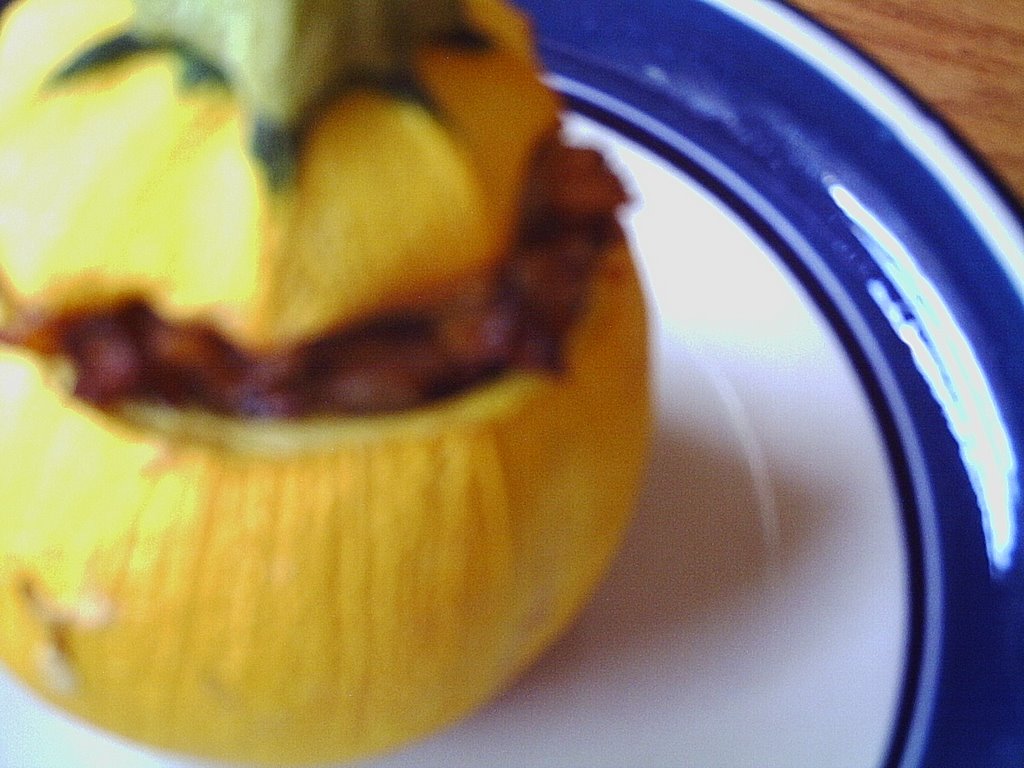
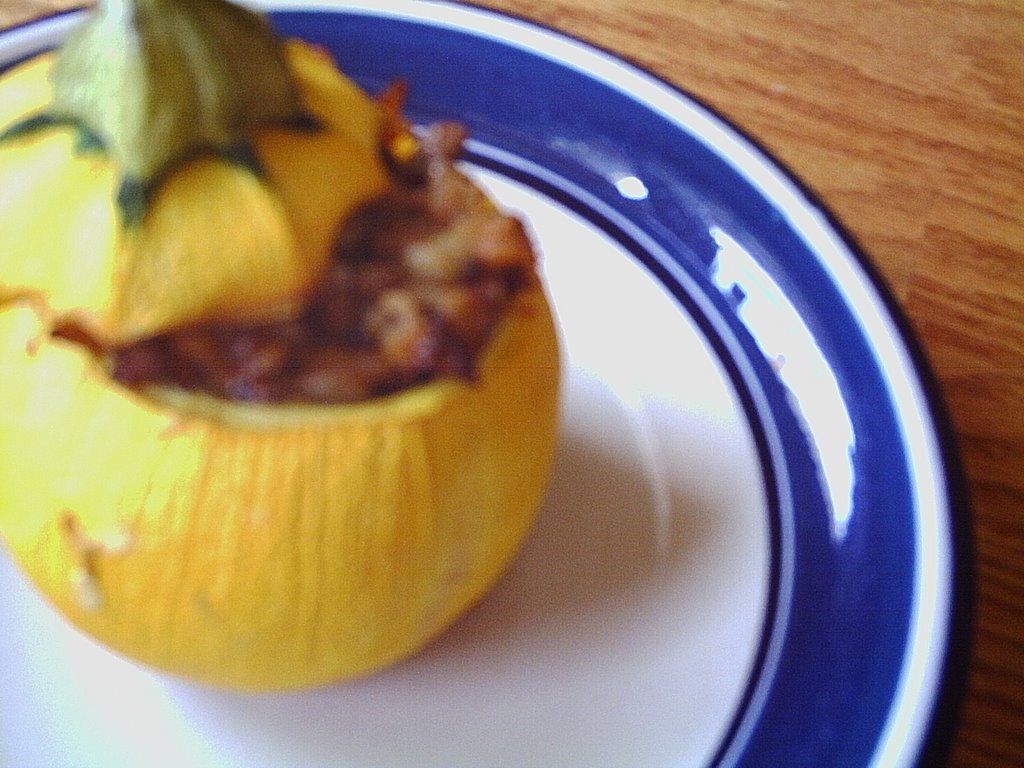
Isn't round zucchini cute? When I saw these little buggers at the farmer's market I just wanted to scoop them up like kittens and baby talk. But reason prevailed so I stuffed them instead.

I cut off the tops and scooped out the pulp with a spoon. The squash shells and tops went into a 450-degree oven for 25 minutes. For the filling I sauteed a large onion with some ground lamb, threw in a healthy dash of garam masala, ground cumin, coriander, cinnamon and ground cayenne, and added cooked jasmine rice. The squash pulp I sauteed seperately with a couple of cloves of garlic; then I added a couple tablespoons of tomato paste dissolved in a little water. I combined the meat and squash mixture and stuffed these little guys to the rim.

I placed them in casserole pan filled with 1/4 inch water and back into the oven for 20 minutes or so. They were as good as they are cute. Next time, though, I would broil the shells, or maybe bake them longer, since the bigger zucchini were a little raw.

Wednesday, July 12, 2006

Green Beans with Ground Lamb

Remember how when you first started food blogging you would update as often as you could? And all you'd think about was those great recipes you couldn't wait to try out? And you'd write really long blog posts, trying to be informative and witty? And then as time went on your enthusiasm began to wane and you updated less? And less?

I suppose I'm talking about myself here. Yes, I've fallen into a food rut. The last four meals I've cooked were vaguely Asian stir-fries, which is all I seem to have the imagination and the desire for these days.

And yet! Today I made something completely new to me-lobio khortsit! Yes, I'm being all foreign and pretentious about green beans with ground lamb. Lobio khortsit could pass as the Georgian version of Hamburger Helper--"the Caucasian equivalent of spaghetti and meatballs," says Anya von Bremzen--but it's so much better.

I tweaked Anya's recipe a little, but this is the basic idea: Saute a large, chopped onion in olive oil till golden; add a pound of ground lamb and cook for 10 minutes. Then add a can of chopped plum tomatoes, plus their liquid, two cloves of crushed garlic, 1/2 tsp. hot Hungarian paprika, 1/8 tsp. cinnamon, 1/8 tsp. cumin and a pound of trimmed, blanched green beans. Cook on low heat for 15-20 minutes or so, until the beans are very tender--Georgians like their green beans well done, and I do too. Eat with rice.

(Anya has you saute the uncooked beans in butter for 10 minutes before adding them to the lamb. If you do this, cook the green beans and lamb on low heat for 20 minutes, covered, and then 15 more minutes, uncovered.)

This is simple food and maybe I liked it so much because I hadn't cooked anything new in a while. In any case, this is pretty delicious stuff. Don't leave out the cinnamon--it's responsible for that exotic, Georgian je ne sais quoi of lobio khortsit.

Homemade Ricotta: a Public Service Announcement

Is there anything you can't do with curdled milk and a piece of cheesecloth? Regular readers of this blog know about my relentless love of tvorog--making it, eating it and baking with it. I'm no less excited about making homemade ricotta. Granted, I've only tried this recipe once, but I can tell you that you should really be making ricotta if you aren't doing so already.

Ricotta is even easier to make than tvorog. Bring milk and cream to a boil; add lemon juice; reduce the heat and stir for a couple of minutes until the milk curdles. My only qualm is that half a gallon of milk barely yields two cups of ricotta and, unlike tvorog, ricotta keeps only for two days.

Wednesday, July 05, 2006

Vinigret

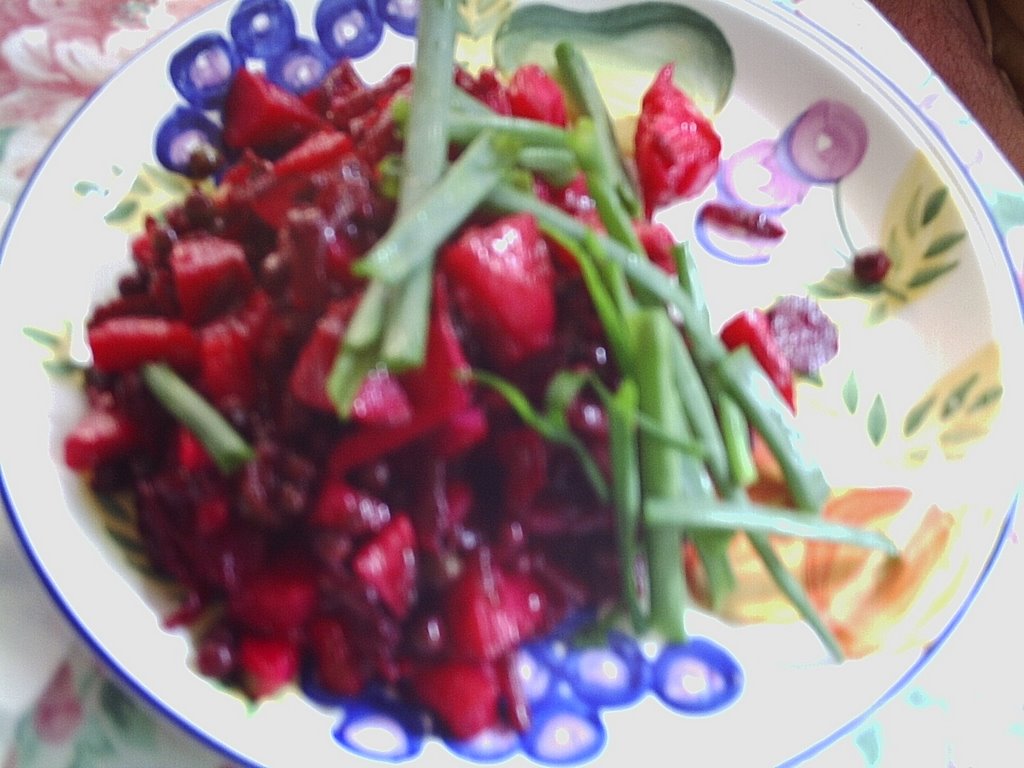
Vinigret is basically a beet and potato salad. Wait, keep reading. It's a potato salad that's worth making and eating. Don't be turned off by the beets--they're grated and mixed with ingredients that bring out their sweet-and-sour flavor. Don't be turned off by the root vegetables--this salad is light, zesty summer fare. But don't go thinking that this is some kind of health food--traditionally, vinigret is accompanied by lots of rye bread, herring, sardines and vodka. I made it for our 4th of July cookout, and we ate with grilled chicken thighs. Vive la melting pot.

Cook, cool and peel 4-5 salad potatoes. Simmer a large beet until tender and let it cool. Dice and combine in a large bowl: the potatoes, 1-2 small cucumbers, 1/2 cup or so red onion and a couple of dill pickles. Grate the beet and add to the bowl. Add 1-1.5 cup peas (use canned for an authentic Soviet vinigret; fresh or frozen for the American version), chopped scallions and chopped dill. Some people also add cooked carrots, diced.

For the dressing I used sunflower oil, red wine vinegar, a little dill pickle juice, a pinch of sugar, salt and pepper. Toss the vinigret, chill for 30-45 minutes and eat.

Wednesday, June 28, 2006

Svekolnik (Cold Borsch)

I have trouble with seasonal cooking. I like hot soups year-round. I will rarely turn down a good stew. I'm uninspired by salads until August, when I can pluck tomatoes and cucumbers right from my mom's backyard garden. I may have qualms about using the oven when it's 80+ degrees in my non-air conditioned apartment, but a nice poppy seed roll chases away my regrets.

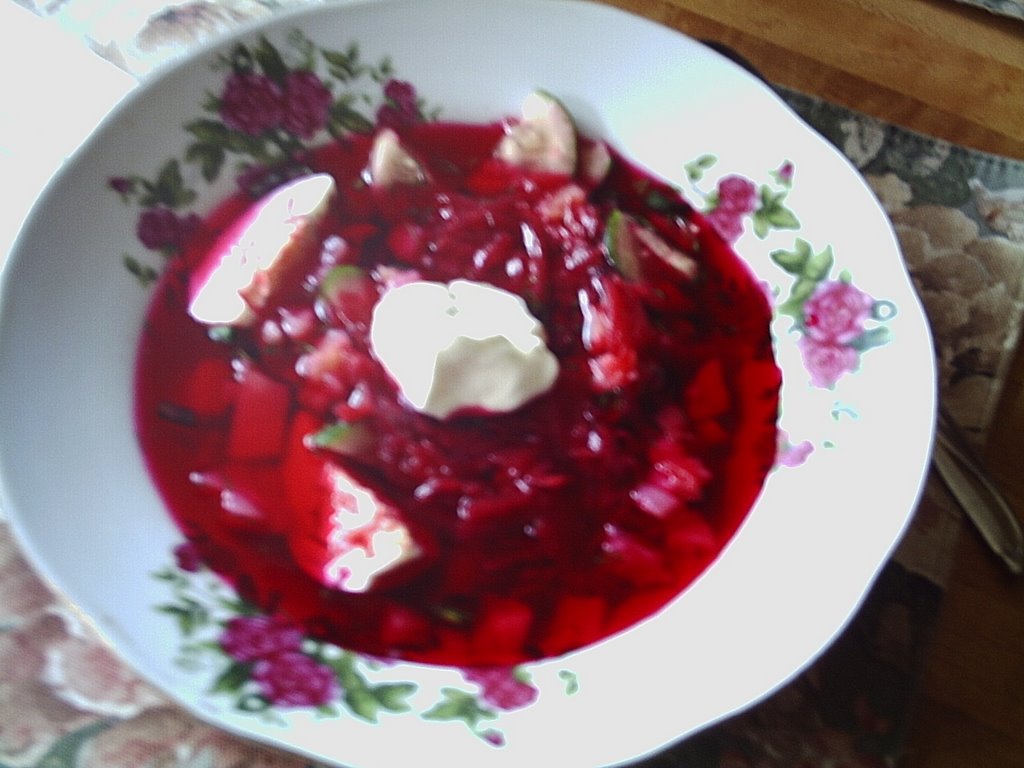
Svekolnik, also known as cold borsch, is one of my consessions to warm weather. It's nothing like hot borsch, which is a meal in a bowl. Rather, svekolnik is a light, low-calorie soup that tastes bests when the weather is hot, hot, hot. It could almost pass for hip, vegan raw food. I'm cheating a bit here because my mom made the soup above. But I liked eating it and will make a svekolnik of my own one of these days.

I don't have the exact recipe, but the basic technique is this: In a soup pot, bring beets and water to a boil, then simmer until the beets are tender. Remove and cool the beets, then peel and grate, adding them back to the liquid.

[Update, August 08: The recipe is this: thoroughly wash and scrub a pound of beets. Cover the beets with six cups of water; bring to a boil; then simmer for 60-90 minutes until soft. Proceed as written.]

Add lemon juice, red wine vinegar, sugar, salt and pepper to the beet liquid to taste. This is the hardest part--underseason, and the soup will be bland. It should taste sweet-and-sour, erring on the side of sour. My mom's secret ingredient is a good splash of dill pickle brine. Chill the soup throughly in the fridge, preferably overnight.

Right before serving, chop up: hardboiled eggs, boiled and peeled potatoes, fresh peeled cucumbers, scallions, dill and parsley. I also like pickles in svekolnik. Divide the fix-ins between bowls, ladle the soup over the top and serve with sour cream.
Related Posts with Thumbnails